





What's Happening?
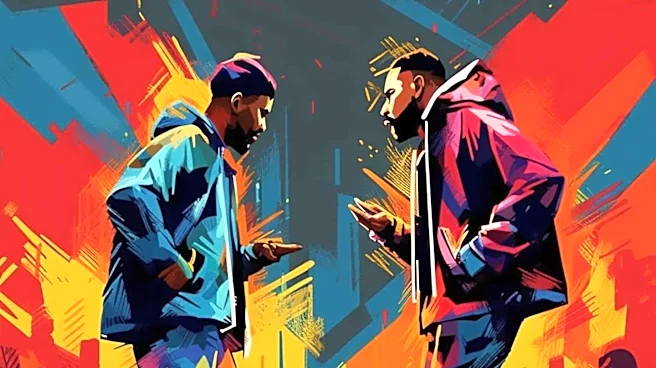
DJ Akademiks has publicly stated his disbelief in widespread industry conspiracy theories suggesting a coordinated effort to undermine Drake's career. While acknowledging the ongoing and often exhaustive nature of the Drake and Kendrick Lamar rivalry,
Akademiks specifically addressed claims that the entire entertainment industry conspired against Drake. During a livestream, he clarified his position, suggesting that Universal Music Group (UMG) might have viewed Kendrick Lamar's diss track, 'Not Like Us,' as a strategic opportunity. According to Akademiks, UMG could have leveraged the track to achieve two objectives: generate significant profit from a popular song and potentially gain an advantage in future renegotiations with Drake. He emphasized that he does not believe in an 'Illuminati industry takedown' or that UMG orchestrated the beef itself, attributing the conflict to the two rappers involved. This perspective comes despite Akademiks' long-standing support for Drake, indicating a nuanced view on the dynamics of the music industry and artist rivalries.
Why It's Important?
DJ Akademiks' commentary is significant because it offers an insider's perspective on the highly publicized rivalry between Drake and Kendrick Lamar, a feud that has captivated the hip-hop community and broader entertainment industry. His dismissal of overarching conspiracy theories could influence public perception, potentially shifting focus from speculative industry machinations to the artists' direct involvement. For UMG, the scenario Akademiks describes highlights the commercial strategies employed by major labels, where even intense artist rivalries can be monetized and used as leverage in business dealings. This situation underscores the complex interplay between artistic expression, commercial interests, and contractual negotiations in the music industry. It also sheds light on how major labels might capitalize on viral cultural moments to benefit their bottom line and strategic positioning with high-profile artists, impacting future contract terms and artist-label relationships.
What's Next?
The ongoing discussion surrounding the Drake and Kendrick Lamar beef is likely to continue, with DJ Akademiks' comments adding another layer to the narrative. While Akademiks has dismissed industry-wide conspiracy theories, his suggestion that UMG might have strategically benefited from the situation could prompt further scrutiny into label practices and artist contracts. This perspective may encourage other industry commentators and fans to analyze the commercial implications of such high-profile feuds more closely. Future developments could include further statements from involved parties, or a continued focus on the financial and contractual aspects of major artists' careers. The impact on Drake's upcoming record deal negotiations, as hinted by Akademiks, will be a key area of interest, as UMG's potential leverage from the success of 'Not Like Us' could influence the terms of any new agreement.
Beyond the Headlines
Beyond the immediate headlines, DJ Akademiks' remarks touch upon deeper ethical and business considerations within the music industry. The idea that a major label could strategically benefit from a highly personal and public feud between its artists raises questions about the extent of corporate influence over artistic narratives and rivalries. It highlights the potential for labels to prioritize commercial gain over the personal or professional well-being of artists, especially when lucrative opportunities arise. This scenario could lead to broader discussions about artist autonomy, fair contractual practices, and the ethical responsibilities of record labels in managing their talent. It also underscores the power dynamics at play, where labels might subtly steer or capitalize on artist conflicts to achieve business objectives, potentially shaping the cultural landscape in ways that serve corporate interests rather than purely artistic ones.