








What's Happening?
The U.S. egg industry is grappling with the adoption of in-ovo sexing technology, which aims to eliminate the culling of male chicks by determining their sex before hatching. While this technology has achieved 40% market penetration in the European Union
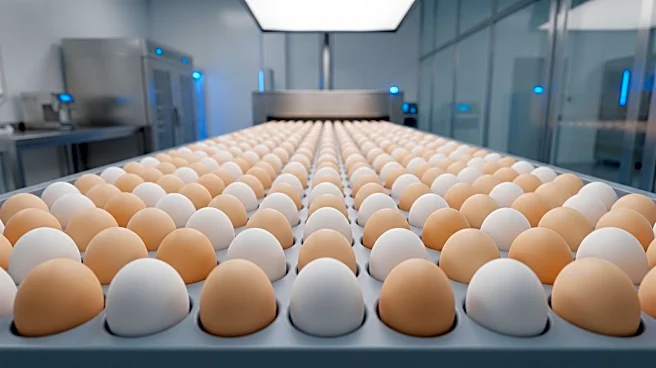
within five years, driven by regulatory bans on male chick culling in several countries, its uptake in the U.S. remains limited. Currently, U.S. hatcheries typically incubate eggs, sex chicks after hatching, and then cull male chicks, which are uneconomical for egg or meat production. The primary barrier to widespread adoption in the U.S. is economic; the costs associated with in-ovo sexing technology still outweigh the savings from freeing up incubator capacity. United Egg Producers (UEP), representing 90% of U.S. egg production, states its commitment to future adoption when the technology becomes economically and operationally feasible. Premium U.S. egg brands, however, are beginning to transition to in-ovo sexing, absorbing the additional costs to enhance their ethical brand positioning.
Why It's Important?
The slow adoption of in-ovo sexing technology in the U.S. egg industry has significant implications for animal welfare, industry efficiency, and consumer choices. The current practice of culling billions of male chicks annually is a major ethical concern for animal welfare advocates. Implementing in-ovo sexing could address this issue, aligning U.S. practices with evolving global standards and consumer expectations for more humane food production. From an efficiency standpoint, the technology could optimize hatchery operations by preventing the incubation of male eggs, although current costs remain a deterrent. The challenge lies in the economic model: who will bear the additional cost? While premium brands are willing to absorb it for brand differentiation, the commodity egg market, which dominates U.S. production, is highly price-sensitive. Without regulatory mandates or a significant reduction in technology costs, widespread adoption will be difficult, potentially leaving the U.S. behind European counterparts in animal welfare standards and technological advancement in this sector.
What's Next?
The future of in-ovo sexing in the U.S. will likely depend on several factors. A key driver would be a reduction in the cost of the technology, making it competitive with manual sexing. Continued innovation is expected, with new technologies emerging, such as gene-editing-based sex-sorting that could identify male embryos before incubation, potentially offering a more cost-effective solution. Increased consumer awareness and demand for 'humanely hatched' eggs could also pressure the industry to adopt the technology, although currently, most consumers are unaware of male chick culling. The role of 'agentic shopping,' where AI agents help consumers find brands aligning with their values, could also indirectly boost demand for ethically produced eggs. While regulatory intervention, similar to that in Europe, could accelerate adoption, it is not currently a primary driver in the U.S. The transition by premium brands, even without passing costs to consumers, may serve as a catalyst, demonstrating feasibility and potentially inspiring broader industry change over time.
Beyond the Headlines
The debate surrounding in-ovo sexing technology in the U.S. egg industry highlights a broader societal tension between economic efficiency, ethical considerations, and technological innovation. The resistance to adopting the technology in the commodity market underscores how deeply ingrained cost-cutting measures are in large-scale food production, often at the expense of animal welfare. This situation prompts a reevaluation of the true cost of food, including its ethical and environmental dimensions. The emergence of AI-driven consumer choices, or 'agentic shopping,' suggests a future where ethical considerations could be seamlessly integrated into purchasing decisions, potentially bypassing the need for explicit consumer education campaigns. This could fundamentally alter market dynamics, rewarding companies that proactively adopt ethical practices. The technological advancements in in-ovo sexing also reflect a growing trend in agriculture towards precision and genetic manipulation, raising deeper questions about the role of technology in shaping our food systems and the ethical boundaries of such interventions.