





What's Happening?
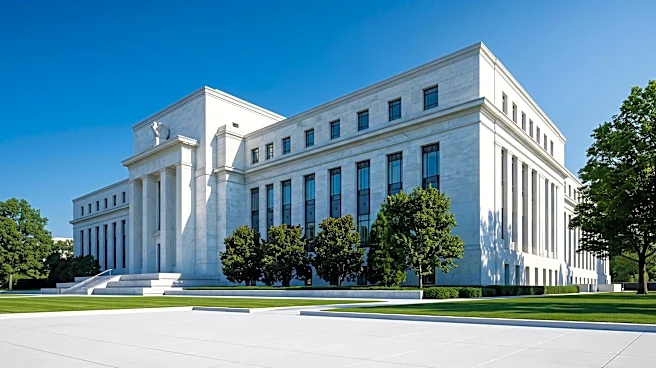
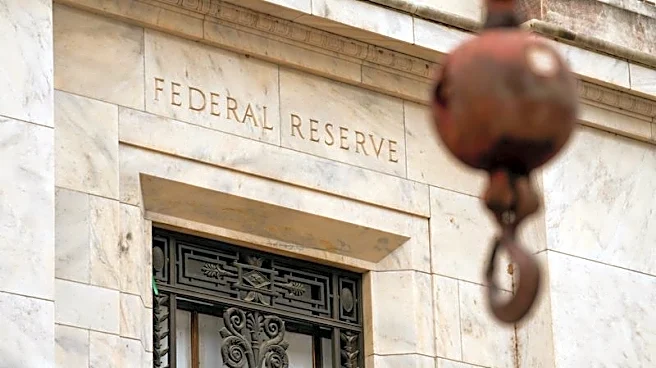
The Federal Reserve, the central bank of the United States, continues to operate under its dual mandate of maintaining stable prices and achieving maximum sustainable employment. Established in 1913, the Fed influences the U.S. economy by setting interest
rates, managing the money supply, and ensuring banking system stability. Its primary tool is the federal funds rate, a benchmark interest rate that impacts borrowing costs across the nation. Decisions regarding this rate are made by the Federal Open Market Committee (FOMC), which convenes approximately eight times annually. The Fed's actions are crucial not only for the U.S. but also for global markets, given the U.S. dollar's central role in international finance. The institution's policies are designed to balance its two potentially conflicting goals, with the effects of rate changes often appearing months after implementation.
Why It's Important?
The Federal Reserve's policies have far-reaching implications for the U.S. economy and global financial markets. By setting the federal funds rate, the Fed directly influences borrowing costs for businesses and consumers, impacting investment, spending, and overall economic activity. For instance, a rate hike designed to combat inflation can increase interest payments on loans, leading to reduced demand and potentially slowing economic growth. Conversely, a rate cut can stimulate borrowing and spending. The dollar's status as a global reserve currency means that Fed decisions also affect international trade, currency exchange rates, and the value of investments worldwide. U.S. industries and economic stakeholders, including investors, businesses, and households, are directly impacted by these decisions, which can influence everything from corporate profits to mortgage rates and job availability.
What's Next?
The Federal Reserve will continue to monitor economic data closely to inform its monetary policy decisions. Future actions will likely focus on balancing its dual mandate of price stability and maximum sustainable employment, especially in the face of ongoing inflation concerns. Markets will continue to scrutinize statements and speeches from Fed officials for any indications of upcoming policy shifts. The FOMC's scheduled meetings will be key events, as any changes to the federal funds rate or other monetary tools will be announced. The Fed's approach to managing the money supply and supporting the banking system will also remain under observation, particularly as it navigates the complexities of economic recovery and potential inflationary pressures. The long-term effects of current policies will unfold over several months, influencing various sectors of the U.S. economy.
Beyond the Headlines
Beyond the immediate economic impacts, the Federal Reserve's role raises deeper questions about the balance between economic stability and growth, and the extent of central bank influence on market behavior. The inherent tension between the Fed's dual mandate—stable prices versus high employment—often forces difficult trade-offs, leading to debates about the optimal path for monetary policy. The lag time between policy implementation and observable effects adds another layer of complexity, making it challenging to precisely gauge the effectiveness of interventions. Furthermore, the global ripple effect of the Fed's decisions highlights the interconnectedness of the world economy and the significant power wielded by a single national institution. This influence can lead to international scrutiny and calls for greater coordination among global financial authorities, underscoring the ethical and political dimensions of central banking.