





What's Happening?
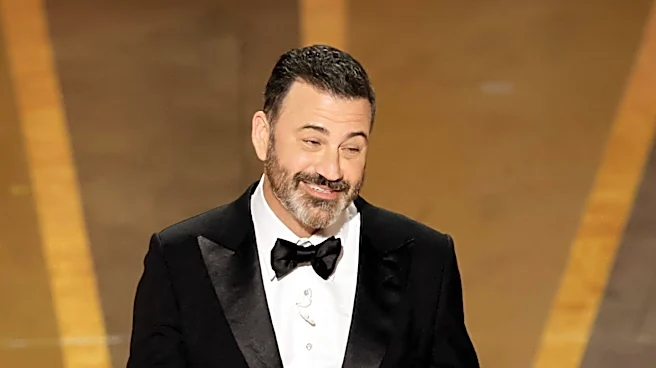
Jimmy Kimmel recently appeared on The Howard Stern Show, where host Howard Stern expressed skepticism about the authenticity of Kimmel's friendship with fellow late-night host Jimmy Fallon. Stern suggested that Kimmel might be pretending to be friends with Fallon to publicly
demonstrate that competing late-night hosts can coexist amicably. Kimmel, however, dismissed these accusations, stating that he genuinely enjoys Fallon's company and that their friendship is not a pretense. He highlighted their shared activities, including Fallon visiting Kimmel's Idaho fishing lodge and their elaborate April Fool's stunt in 2022 where they swapped shows. Kimmel also mentioned having dinner plans with Fallon during his current visit to New York, further emphasizing the reality of their bond. Stern himself played a role in fostering their friendship in 2017 by arranging a dinner between the two Jimmys after learning they only communicated via email.
Why It's Important?
This interaction sheds light on the evolving dynamics within the late-night television landscape. Historically, rivalries between late-night hosts were a significant part of the industry's narrative. However, the current generation of hosts, including Kimmel, Fallon, Stephen Colbert, Seth Meyers, and John Oliver, appears to foster a more collaborative and friendly environment. This shift is exemplified by their joint podcast, 'Strike Force Five,' formed during the 2023 writers' strike, which originated from a private group text. This camaraderie among competitors can influence audience perception, potentially leading to a more unified and less cutthroat image of late-night television. It also suggests a move away from manufactured rivalries towards genuine professional and personal relationships, which could impact how future late-night shows are structured and promoted.
What's Next?
Despite Kimmel's assurances, Howard Stern remained unconvinced, even expressing concern that his own appearance on Fallon's 'Tonight Show' might upset Kimmel. Stern is scheduled to appear as a guest on 'Jimmy Kimmel Live!' in Brooklyn, where the topic of their friendship may be revisited. This ongoing discussion could further solidify or challenge the public perception of the relationship between these prominent late-night figures. The continued visibility of their interactions, whether through joint appearances, social media, or interviews, will likely shape the narrative around late-night host camaraderie. The precedent set by their friendly dynamic could also influence how new hosts entering the late-night scene approach their relationships with competitors.
Beyond the Headlines
The discussion about Kimmel and Fallon's friendship touches upon broader themes of authenticity and public image in entertainment. In an era where celebrity personas are often carefully curated, the question of whether a friendship is 'real' or 'performative' resonates with audiences. The shift from intense rivalries to collaborative relationships among late-night hosts could reflect a changing cultural expectation for public figures, favoring genuine connection over manufactured drama. This trend might also be a strategic response to the fragmented media landscape, where collaboration can amplify reach and engagement. The ability of these hosts to maintain friendly relationships despite being direct competitors could serve as a model for other industries, demonstrating that professional success doesn't always require adversarial dynamics.