




What's Happening?
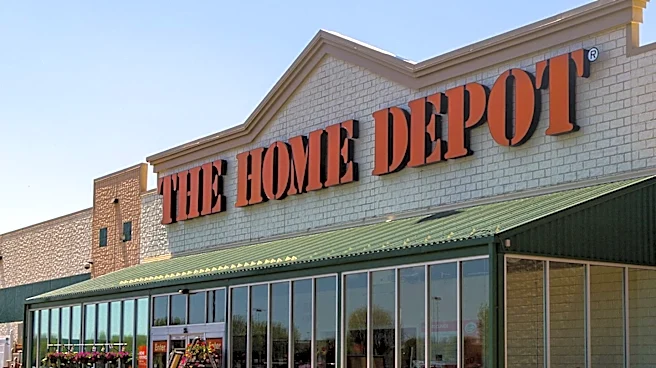
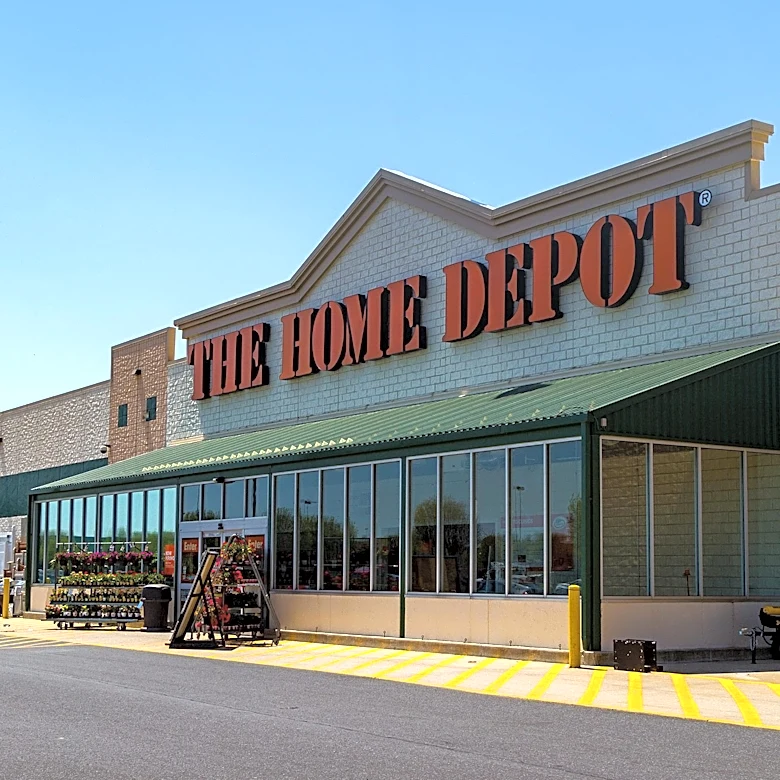
Ted Decker has stepped down from his roles as president and CEO of Home Depot, Inc. He will, however, continue to serve as the chairman of the company's board. This announcement follows Decker's return from a temporary medical leave. The company recently
reported its third-quarter sales, which reached $43.4 billion, marking a 4.9% increase compared to the previous year. Adjusted earnings per share (EPS) for the quarter were $3.86, up from $3.74 a year earlier. Despite these positive financial results, Home Depot's shares experienced a decline. The company also revised its fiscal 2026 sales-growth outlook upwards to approximately 4.5%. Industry analysis from GuruFocus indicates that contractor demand for Home Depot's products and services has remained stronger than do-it-yourself (DIY) spending, while high borrowing costs continue to impact larger renovation projects.
Why It's Important?
This leadership transition at Home Depot occurs at a pivotal time for the retail giant, as it navigates evolving consumer spending habits and economic pressures. The company's decision to raise its long-term sales-growth outlook signals confidence in its future performance, despite the immediate dip in share prices. The continued strength in contractor demand suggests a robust professional market, which is a significant segment for Home Depot. However, the impact of high borrowing costs on larger renovation projects highlights a potential vulnerability in the broader housing and construction sectors. This shift in leadership, with Decker remaining as chairman, could provide continuity while allowing for fresh executive perspectives to address these market dynamics. The downgrade by Zelman & Associates from Neutral to Underperform also indicates a cautious outlook from some financial analysts regarding the company's near-term prospects.
What's Next?
With Ted Decker transitioning to solely chairman, the company will likely focus on ensuring a smooth leadership handover and maintaining its strategic direction. The incoming CEO will face the immediate challenge of sustaining growth amidst fluctuating economic conditions, particularly the impact of high borrowing costs on consumer spending for large-scale home improvement projects. Home Depot will need to continue monitoring the balance between contractor demand and DIY spending, adapting its inventory and marketing strategies accordingly. The company's updated fiscal 2026 sales-growth outlook will be a key metric for investors and analysts to track, as will its ability to manage shareholder expectations following the recent share decline. Future earnings reports will provide further insight into how these leadership changes and market conditions are affecting the company's financial performance.
Beyond the Headlines
The leadership change at Home Depot, coupled with its financial performance, reflects broader trends in the U.S. housing and retail sectors. The sustained strength in contractor demand suggests that professional construction and renovation activities are holding up, potentially driven by commercial projects or essential home repairs that are less sensitive to interest rate fluctuations. Conversely, the slowdown in larger DIY projects due to high borrowing costs points to a more cautious consumer environment for discretionary spending on home improvements. This dynamic could lead Home Depot to further refine its business model, potentially emphasizing its professional services and contractor-focused offerings. The transition also highlights the importance of succession planning in large corporations, ensuring stability and strategic continuity even during executive changes. The market's reaction to the news, including the share decline despite positive sales figures, underscores the complex interplay of leadership, financial performance, and investor sentiment.