




What's Happening?
Hawaiian Airlines, as part of the Alaska Air Group, is set to significantly enhance its premium travel offerings and upgrade its fleet. The airline will introduce new interiors for its 24 A330 widebody aircraft starting in 2028. These upgrades will include
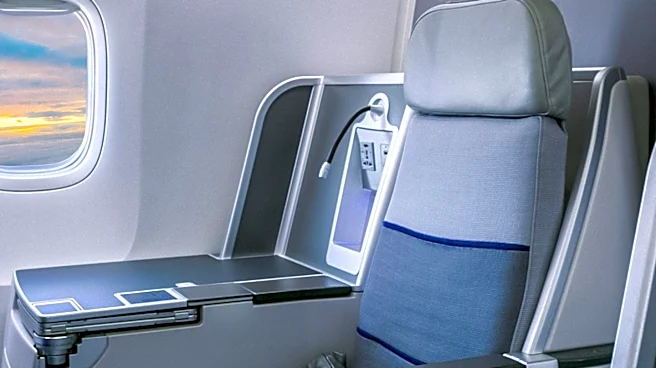
22 enhanced Leihōkū Suites for international Business Class and domestic First Class flights. The overall premium seating capacity on these A330s will increase from 30% to approximately 40%. Additionally, the entire A330 cabin will receive new interiors, an upgraded inflight entertainment system featuring 4K screens, and Bluetooth connectivity. This initiative is part of a broader investment by Alaska Air Group in guest experience, which also includes the introduction of a new Premium Reserve economy cabin across select Alaska and Hawaiian aircraft in 2028. The Leihōkū experience is inspired by early Polynesian navigation and wayfinding, aiming to shape premium journeys from the airport to the aircraft.
Why It's Important?
This significant investment by Hawaiian Airlines and Alaska Air Group underscores a growing trend in the U.S. airline industry towards enhancing premium travel experiences. By increasing premium seating and upgrading cabin amenities, Hawaiian Airlines aims to attract and retain high-value customers, particularly on its routes to Asia, Oceania, and select North America destinations. The introduction of lie-flat suites, 4K inflight entertainment, and Bluetooth connectivity will elevate the passenger experience, potentially leading to increased customer satisfaction and loyalty. This move could also intensify competition among U.S. carriers, prompting other airlines to re-evaluate and upgrade their own premium offerings. For economic stakeholders, this investment signifies confidence in the long-term growth of air travel and could stimulate demand for related services and industries, such as aircraft interior design and manufacturing. The focus on Hawaiian-inspired branding also reinforces cultural identity, which can be a unique selling proposition in the competitive travel market.
What's Next?
The new premium experiences, including the Leihōkū Suites and upgraded A330 interiors, are scheduled to begin rolling out in 2028. Passengers can anticipate a more luxurious and technologically advanced travel experience on Hawaiian Airlines' international and domestic premium routes. The introduction of the Premium Reserve economy cabin in 2028 will also offer more space and comfort for passengers on longer flights. Hawaiian Airlines will continue to work with the Hawaiʻi Department of Transportation and airport partners to prepare for these fleet transitions and ensure a seamless integration of the new offerings. The airline's focus on enhancing the entire journey, from booking to arrival, suggests ongoing efforts to refine customer service and operational efficiency. Competitors will likely monitor the success of these upgrades, potentially influencing their own future investment strategies in premium travel.
Beyond the Headlines
The strategic decision by Hawaiian Airlines to significantly expand its premium seating and enhance onboard experiences reflects a deeper understanding of evolving consumer expectations in the travel sector. Beyond mere comfort, the integration of 4K screens and Bluetooth connectivity speaks to the increasing demand for personalized and seamless digital experiences even at 30,000 feet. The cultural inspiration behind the 'Leihōkū' suites, drawing from Polynesian navigation, adds a unique narrative and sense of place to the premium offering, differentiating it from more generic luxury experiences. This approach could foster a stronger emotional connection with passengers, particularly those traveling to or from Hawaii. Furthermore, the increased premium capacity suggests a long-term bet on the profitability of high-end travel, potentially signaling a shift in airline business models towards maximizing revenue from premium cabins rather than solely focusing on volume in economy class. This could have broader implications for fare structures and accessibility of air travel in the future.