






What's Happening?
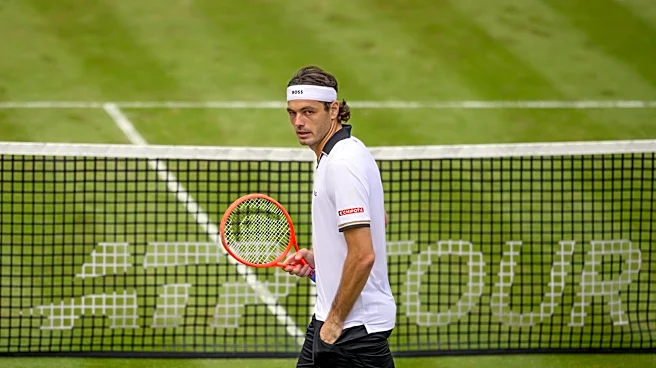
American tennis player Taylor Fritz, currently ranked world No. 9, has opted not to travel to Turin, Italy, for the ATP Finals, turning down an offer of $156,000 (approximately R$880,000 before taxes) to serve as an alternate. Following his victory at the ATP 250
tournament in Stockholm, Sweden, Fritz decided to conclude his season early to prioritize rest and preparation for the 2027 season. The ATP Finals feature the top eight players of the season, and while Fritz did not qualify directly, he was offered a reserve position, which would have allowed him to compete if a qualified player withdrew. His refusal means Canadian Felix Auger-Aliassime, world No. 17, will take the alternate spot, with Australian Alex de Minaur, world No. 11, as the first alternate.
Why It's Important?
Fritz's decision highlights a growing trend among top athletes to prioritize long-term health and career longevity over immediate financial gains and competitive opportunities. By choosing rest, Fritz aims to mitigate burnout and reduce the risk of injury, which could have significant implications for his performance in future seasons. This move could influence other players to consider similar strategies, potentially leading to more strategic scheduling and a greater emphasis on player well-being within professional tennis. While he foregoes a substantial sum, the long-term benefits of a proper off-season could outweigh the short-term financial loss, impacting his ability to compete at the highest level in upcoming Grand Slams and major tournaments.
What's Next?
With Fritz's withdrawal, Felix Auger-Aliassime and Alex de Minaur will serve as alternates for the ATP Finals, ready to step in if any of the eight qualified players are unable to continue. This ensures the tournament maintains its full roster of participants. For Fritz, the focus will now shift entirely to his off-season training and preparation for the 2027 season. His decision could set a precedent for how players manage their schedules, especially those who have had demanding seasons but narrowly miss direct qualification for prestigious year-end events. The tennis community will observe whether this choice positively impacts his performance in the next season, potentially validating his strategic approach.
Beyond the Headlines
Fritz's choice to decline the alternate position, despite the significant financial incentive, underscores a broader discussion within professional sports regarding player welfare and the intense demands of the modern athletic calendar. It raises questions about the balance between competitive drive, financial reward, and the physical and mental health of athletes. This decision could spark further conversations about the structure of the tennis season, the number of mandatory tournaments, and the support systems in place for players. It also reflects a personal agency, where an athlete is willing to make a financially costly decision for what they perceive as a greater long-term benefit to their career and well-being, potentially inspiring other athletes to assert similar control over their professional lives.