
What's Happening?
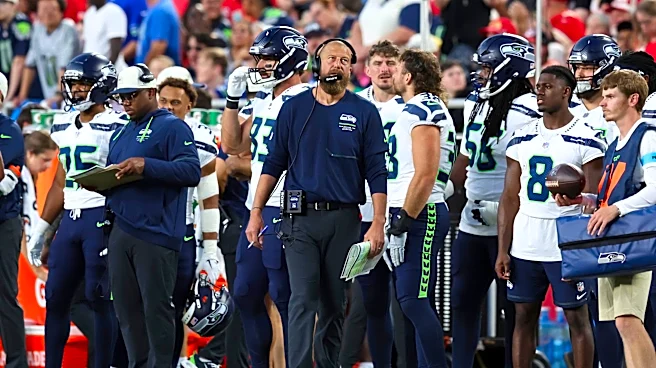
Vinod Khosla, owner of the Seattle Seahawks, was observed speaking with general manager John Schneider prior to a game against the New England Patriots. This interaction comes as the Seahawks' secondary
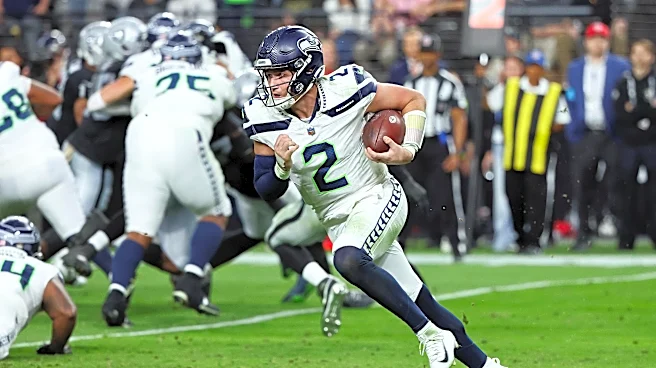
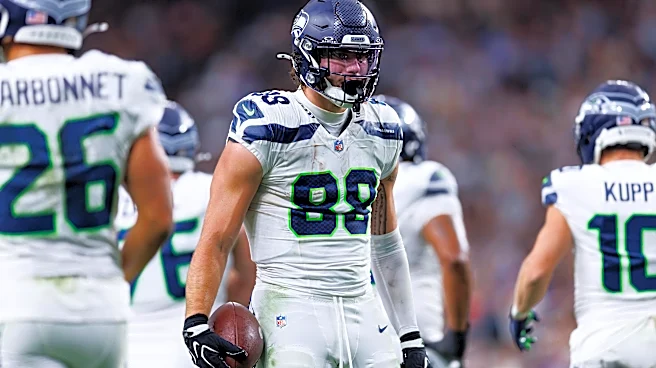
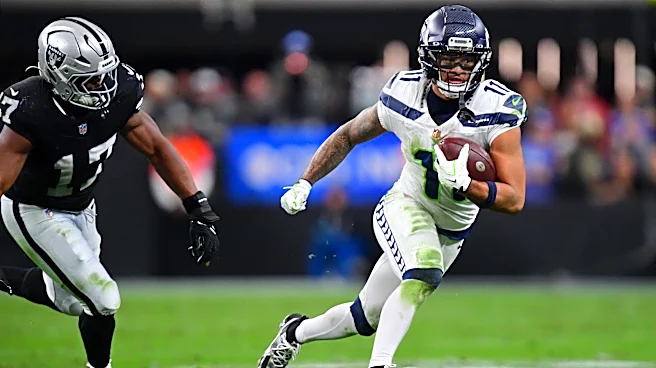
receivers are facing scrutiny for their performance, particularly in anticipation of an upcoming game against the San Francisco 49ers. Beyond superstar Jaxon Smith-Njigba, other receivers like Rashid Shaheed, Cooper Kupp, Tory Horton, and tight end A.J. Barner have shown inconsistent development or a decline in performance. Shaheed, who signed a three-year, $51 million contract, has a PFF grade of 54.7 for the 2026 season, falling short of expectations. The team's expected points added (EPA) against man coverage has significantly decreased from 0.15 EPA per drop back in 2025 to -0.09 EPA per drop back this season, indicating a struggle to scheme players open. General manager John Schneider reportedly sought to acquire a receiver at the NFL Trade Deadline but no material changes occurred.
Why It's Important?
The performance of the Seattle Seahawks' receiving corps directly impacts the team's offensive capabilities and their pursuit of an NFC title and potential Super Bowl repeat. The reliance on Jaxon Smith-Njigba alone is deemed unsustainable, highlighting a critical need for other pass-catching options to step up. The significant investment in players like Rashid Shaheed, who is not meeting expectations, raises questions about player evaluation and contract efficacy. The decline in EPA against man coverage suggests strategic and execution issues within the offensive scheme, potentially affecting the team's competitive standing in the league. The inability to secure additional receiving talent at the trade deadline further emphasizes the current roster's need to improve internally, placing pressure on existing players and coaching staff.
What's Next?
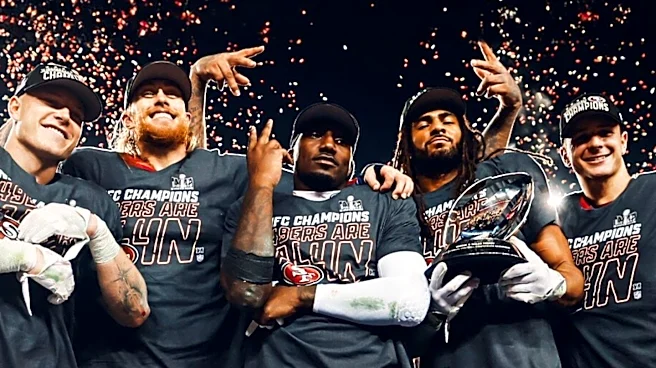
The Seattle Seahawks are expected to continue efforts to maximize the performance of their current receiving corps, particularly Rashid Shaheed and Cooper Kupp, given the substantial investment in them. Tory Horton may see a continued role as the fourth receiver, despite arguments for increased snaps. The team's offensive coordinator, Brian Fleury, will likely face pressure to devise schemes that better utilize the available talent and create offensive diversity. The upcoming game against the San Francisco 49ers will be a crucial test for the receivers to demonstrate improvement. The team's ability to address these receiving challenges will be key to their aspirations for an NFC title and a potential Super Bowl championship.
Beyond the Headlines
The struggles of the Seahawks' receivers underscore broader challenges in professional sports regarding player development, contract value, and team strategy. The high financial investment in players like Shaheed, coupled with underperformance, highlights the inherent risks in sports contracts and the pressure on athletes to deliver. The team's reliance on a single star player, Jaxon Smith-Njigba, exposes a vulnerability that can be exploited by opposing defenses, emphasizing the importance of a well-rounded roster. This situation also reflects the constant pressure on general managers like John Schneider to make effective personnel decisions and on coaching staff to adapt strategies to optimize player performance, ultimately impacting team morale and fan engagement.