




What's Happening?
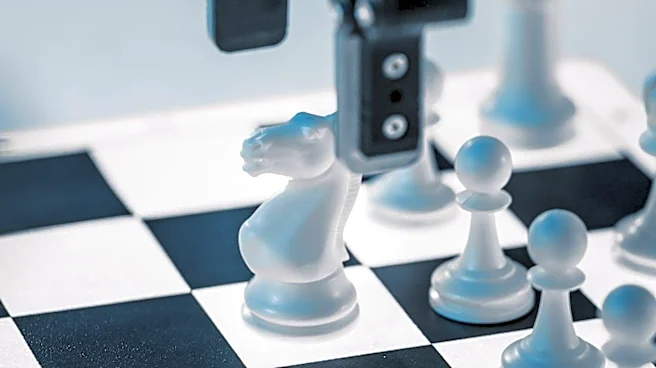
Justin Lesinski, a Mechanical Engineering student at Purdue University, developed a self-setting chessboard during the 2020 pandemic. His freshman internship was canceled due to the pandemic, prompting him to undertake a self-directed project from his
parents' garage. The result was a chessboard that automatically sets its pieces, constructed using laser-cut and 3D-printed components. Lesinski briefly sold versions of this innovative chessboard on Etsy. While he no longer sells the chessboards, he continues to develop his manufacturing capabilities. In the interim, he sells utility knives of his own design through his website, Lesinski Designs. This project showcases his ingenuity and practical application of engineering skills despite the challenges posed by the pandemic.
Why It's Important?
Justin Lesinski's self-setting chessboard project highlights the resilience and innovative spirit of young American engineers, particularly during periods of disruption like the COVID-19 pandemic. His initiative to turn a canceled internship into a hands-on engineering project demonstrates the value of experiential learning and self-driven innovation. This kind of ingenuity can inspire other students and aspiring entrepreneurs to pursue their ideas, fostering a culture of creativity and problem-solving within the U.S. educational and entrepreneurial landscape. Furthermore, the project's reliance on accessible technologies like laser cutting and 3D printing underscores the growing democratization of manufacturing and prototyping, enabling individuals to develop complex products outside traditional industrial settings. This trend can contribute to the growth of small businesses and niche markets, potentially impacting local economies and diversifying the manufacturing sector. His ability to pivot to selling utility knives also showcases entrepreneurial adaptability.
What's Next?
Lesinski is currently focused on building up his manufacturing capability, indicating a long-term vision for his design and engineering endeavors. While the self-setting chessboard is not currently for sale, the development of his manufacturing infrastructure could potentially lead to its re-release or the creation of other innovative products. His current venture, selling utility knives through Lesinski Designs, suggests a continued interest in product design and direct-to-consumer sales. Future steps might include expanding his product line, seeking investment for larger-scale production, or even collaborating with established companies in the design or engineering sectors. His journey could also serve as a case study for universities and incubators looking to promote student entrepreneurship and practical engineering skills.
Beyond the Headlines
Justin Lesinski's story transcends a simple product development narrative; it speaks to the evolving nature of education, entrepreneurship, and the maker movement in the U.S. The pandemic, while disruptive, inadvertently fostered a wave of independent innovation as traditional pathways were temporarily closed. Lesinski's project exemplifies how readily available tools and online platforms (like Etsy) can empower individuals to become creators and entrepreneurs. This phenomenon has broader implications for the future of work and manufacturing, suggesting a potential shift towards more decentralized, agile production models. It also highlights the importance of fostering curiosity and practical skills in engineering education, preparing students not just for corporate roles but also for independent ventures. The ethical dimension of intellectual property and open-source design could also be explored in such projects, as the accessibility of tools often leads to community-driven innovation.