






What's Happening?
Best Buy is piloting a new business-to-business (B2B) retail concept in Canada, opening dedicated Business Centres within two existing stores in the Greater Toronto Area. This initiative aims to serve commercial customers, with Best Buy's B2B division
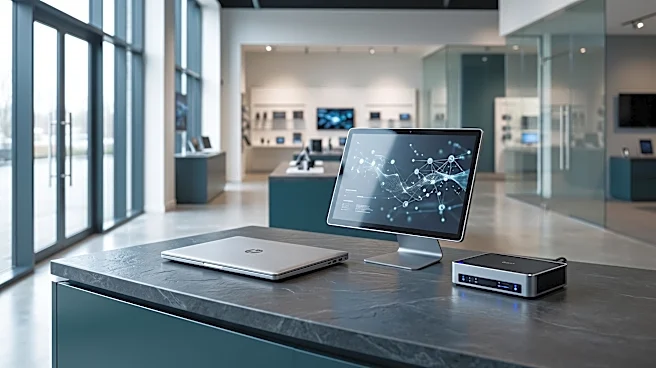
projected to generate approximately US$1.3 billion in revenue this fiscal year, marking an annual growth of about 20%. The Business Centres, located in Markham and Mississauga, feature demonstration areas staffed by business advisors and offer commercial-grade technology not typically found in standard Best Buy stores. Products include computers, digital signage, point-of-sale systems, conferencing equipment, and networking solutions from various brands. Customers can visit without appointments or schedule consultations, gaining access to broader commercial procurement and professional services like audiovisual installation and device lifecycle management. Best Buy CEO Jason Bonfig highlighted that these Canadian centers are an example of the company's rapid experimentation to understand what works in this specific commercial space. The company has a history of drawing on its Canadian operations to develop new business initiatives in the United States, as seen with its online marketplace strategy.
Why It's Important?
This Canadian pilot program holds significant implications for Best Buy's U.S. operations and the broader retail landscape. By testing dedicated B2B centers within existing stores, Best Buy is exploring an efficient model to expand its commercial technology business without incurring the costs of separate premises. If successful, this strategy could be replicated in the U.S., allowing Best Buy to tap into the lucrative small and medium-sized business market, which often lacks dedicated technology procurement resources. The move could position Best Buy as a more comprehensive technology solutions provider, competing with specialized resellers and manufacturers. For U.S. businesses, this could mean more accessible and integrated technology procurement options. The success of this model could also influence other major U.S. retailers to re-evaluate their physical store footprints, potentially dedicating portions of their retail space to specialized commercial services, thereby transforming the role of traditional brick-and-mortar stores in an increasingly digital economy. The experience gained in Canada, as noted by former CEO Corie Barry regarding the online marketplace, often informs Best Buy's U.S. strategies, suggesting a potential future expansion of this B2B model south of the border.
What's Next?
Best Buy will closely monitor the performance of these pilot Business Centres in Canada to determine their future direction and potential expansion. CEO Jason Bonfig indicated that the commercial contribution of these dedicated spaces would be a crucial factor in deciding where additional centers could be viable. The company will assess how much additional commercial activity its existing real estate can support and whether dedicating more store space to business customers is warranted. If the Canadian pilots prove successful in attracting and retaining commercial clients, generating significant revenue, and improving profit margins, Best Buy may consider rolling out similar B2B centers within its U.S. stores. This could lead to a strategic shift in how Best Buy utilizes its extensive U.S. retail footprint, potentially reconfiguring stores to include dedicated commercial sections. The insights gained from this Canadian experiment will likely inform Best Buy's long-term strategy for its B2B division, influencing investment decisions in commercial technology offerings and professional services across North America.
Beyond the Headlines
The establishment of these Business Centres reflects a broader trend in retail where traditional consumer-focused stores are adapting to serve diverse market segments, including commercial clients. This move by Best Buy highlights the evolving role of physical retail spaces, transforming them from mere product showrooms into service-oriented hubs that offer specialized advice and solutions. Ethically, this approach could enhance accessibility for small and medium-sized businesses to advanced technology and expert consultation, potentially leveling the playing field against larger corporations with dedicated IT departments. Culturally, it signifies a shift in consumer electronics retail towards a more integrated, solution-based model rather than just transactional sales. Long-term, this strategy could lead to a more resilient retail model for Best Buy, diversifying its revenue streams beyond consumer electronics, which are often subject to fluctuating demand and intense competition. It also underscores the importance of international markets, particularly Canada, as testing grounds for innovative retail concepts that can later be scaled to the larger U.S. market.