






What's Happening?
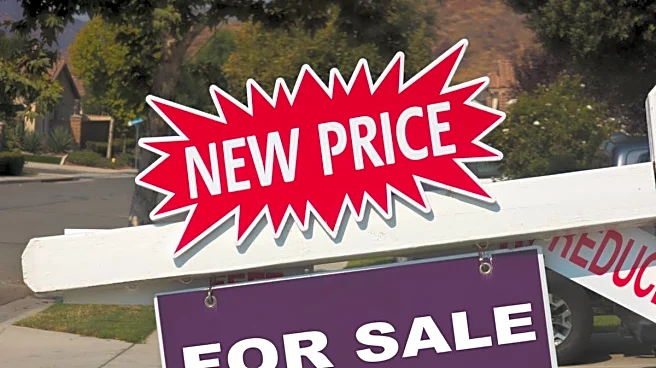
Realtor.com has released its June 2026 Monthly Housing Trends Report, highlighting a significant decline in national housing prices. The report indicates that asking prices fell by 2.5% year-over-year, marking the steepest annual decline since 2017. This
decline represents the eighth consecutive month of falling prices. Despite the national trend, regional variations are evident, with the West experiencing a 7.3% drop and the South a 3.5% decrease since June 2022. Conversely, the Midwest and Northeast saw price increases of 10% and 12.6%, respectively. The report also notes a 3.7% rise in pending sales, marking the seventh consecutive month of growth. Additionally, the median time homes spent on the market in June was identical to the previous year, ending a 26-month streak of slower sales.
Why It's Important?
The report's findings are significant as they reflect a rebalancing in the U.S. housing market. The decline in national housing prices, coupled with regional disparities, suggests varying economic conditions across the country. In regions like the West and South, affordability constraints have led to price reductions, while the Midwest and Northeast have maintained strong demand and limited supply, resulting in price increases. This divergence highlights the complexity of the housing market and the need for region-specific strategies by policymakers and real estate professionals. The increase in pending sales and stabilization of time on the market indicate a functioning market, with buyers and sellers adjusting to current conditions.
What's Next?
Looking ahead, the housing market is expected to experience a seasonal slowdown in July, as buyer urgency fades and activity decreases. Realtor.com anticipates that price cuts may accelerate beyond the usual summer pattern, and new listings could either pull back or flatten out. The report suggests that the market is unlikely to stall as it did last summer, given the current leading indicators. Stakeholders in the housing market, including real estate agents and policymakers, will need to monitor these trends closely to adapt their strategies accordingly.