





What's Happening?
Gabe Newell, co-founder of Valve Corporation, has implemented an unprecedented egalitarian approach aboard his $500 million superyacht, Leviathan. Unlike traditional superyachts where crew quarters are often confined, Newell has dedicated the main deck
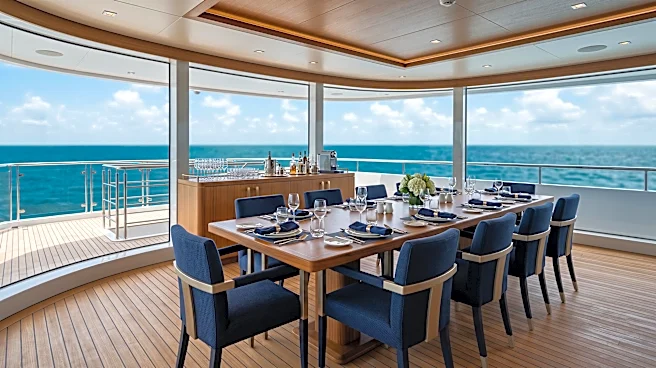
as a crew mess, offering five-star comfort and amenities typically reserved for owners and guests. This includes varied seating areas, an open kitchen, and a buffet. All amenities, such as the aft pool, gaming lounge, basketball court, and sundeck, are communal and accessible to everyone on board, including the 26 guests and 37 crew members. Crew cabins on the Leviathan are designed to rival luxury hotel rooms, featuring double beds, elegant lighting, framed artwork, and proper windows, a stark contrast to the cramped accommodations found on most vessels. This management style has resulted in an exceptionally high crew retention rate, with crew members staying for over four years on average, significantly longer than the industry standard of nine months, according to SuperYacht Times.
Why It's Important?
Newell's innovative approach to superyacht management challenges conventional norms within the luxury maritime industry. By prioritizing the well-being and respect of his crew, he demonstrates a model that could influence future superyacht designs and operational philosophies. This shift towards an egalitarian environment not only improves working conditions for crew members but also fosters a more collaborative and harmonious atmosphere on board. The extended tenure of his crew suggests that investing in employee satisfaction can lead to greater loyalty and potentially higher quality service. This could set a new benchmark for how luxury vessel owners interact with and value their staff, potentially impacting labor practices and design considerations across the superyacht sector. The emphasis on communal spaces and high-quality crew accommodations could also attract a more skilled and dedicated workforce to the industry.
What's Next?
The long-term impact of Newell's management style on the superyacht industry remains to be seen, but it could inspire other owners to re-evaluate their crew treatment and vessel design. As awareness of the Leviathan's unique operational model grows, there may be increased pressure on other superyacht owners and builders to adopt similar practices. This could lead to a broader industry trend towards more humane and equitable working conditions for yacht crews. Furthermore, the success of Newell's approach might encourage discussions about labor standards and employee welfare within the luxury service sector, potentially influencing policy or best practices. The example set by the Leviathan could also become a case study for management and hospitality professionals interested in fostering high-retention, high-satisfaction work environments.
Beyond the Headlines
Newell's philosophy extends beyond mere comfort; it reflects a deeper ethical consideration for all individuals involved in the operation of his vessel. By involving the crew in the design process and choosing materials like a striking graphic synthetic material for the decks instead of wood, he actively reduces their maintenance burden. This practical consideration, combined with the symbolic gesture of a massive floor-to-ceiling glass wall etched with the names of nearly 3,000 individuals who contributed to the build, underscores a profound respect for human contribution and effort. This approach challenges the traditional hierarchical structures often found in luxury settings, promoting a culture where every individual's role is valued and acknowledged. It highlights how personal ethos can drive significant changes in industry practices, fostering a more inclusive and respectful environment.