






What's Happening?
The traditional 60/40 investment portfolio, comprising 60% stocks and 40% bonds, has shown signs of breaking down, particularly since the resurgence of inflation. Historically, bonds acted as a buffer, rising when stocks fell. However, according to Yahoo
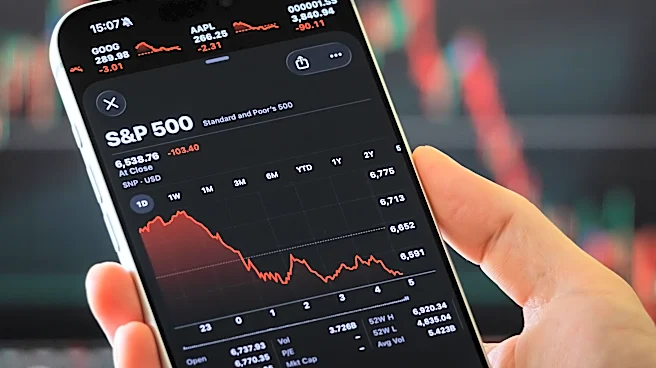
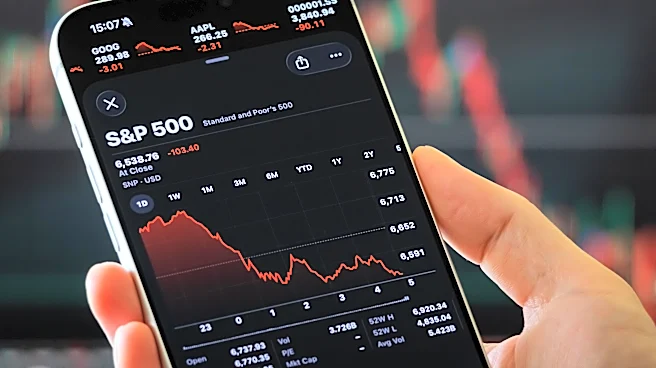
Finance calculations, bonds have largely moved in tandem with stocks on the market's best days this year and offered little protection on its worst. This trend is a significant departure from the period between 2000 and 2021, when 10-year Treasury bonds rose in 16 out of 18 stock market drops of 10% or more. Since 2022, this correlation has shifted, with bonds rising in only 2 out of 6 such instances. The exception this year was during the AI sell-off, where concerns about AI spending led to a more than 10% drop in the S&P 500, and bonds subsequently rose, softening the impact.
Why It's Important?
The underperformance of the 60/40 portfolio has significant implications for individual investors, especially those in target-date funds built on this model. The primary reason for this shift is inflation. When inflation rises, the Federal Reserve typically increases interest rates, which devalues older bonds paying lower interest. This scenario can lead to both stocks and bonds declining simultaneously, as observed in 2022 when both posted double-digit losses for the first time in over a century. Furthermore, the increasing borrowing by tech giants for data centers, driven by AI advancements, is creating competition with government bonds for buyers. JPMorgan Asset & Wealth Management's Michael Cembalest noted that this could be causing a supply-demand issue for long-term bonds, further complicating the traditional role of bonds in a diversified portfolio.
What's Next?
Investors may need to re-evaluate their portfolio strategies in light of these changing market dynamics. The traditional assumption that bonds will always act as a hedge against stock market downturns is being challenged by persistent inflation and new market pressures from technological advancements like AI. Future inflation reports, particularly the Consumer Price Index, will continue to be critical indicators, as hotter-than-expected reports have historically led to simultaneous declines in both stocks and bonds. The ongoing demand for capital by major tech companies for AI infrastructure could also continue to influence bond markets, potentially leading to sustained supply-demand imbalances. This suggests a need for investors to consider alternative diversification strategies or adjust their expectations for bond performance.
Beyond the Headlines
The current challenges to the 60/40 portfolio highlight a broader shift in economic and investment paradigms. The return of significant inflation, after decades of relative stability, is fundamentally altering how different asset classes behave. The rise of AI and its associated capital demands introduce a new variable, creating competition for capital that was not present in previous market cycles. This situation underscores the dynamic nature of modern portfolio theory, originally conceived by Harry Markowitz in 1952, which emphasizes that diversification works best when asset classes do not move in tandem. The current environment suggests that the historical non-correlation between stocks and bonds is weakening, prompting a re-examination of foundational investment principles and potentially leading to the development of new portfolio construction methodologies to navigate these evolving market conditions.