
What's Happening?
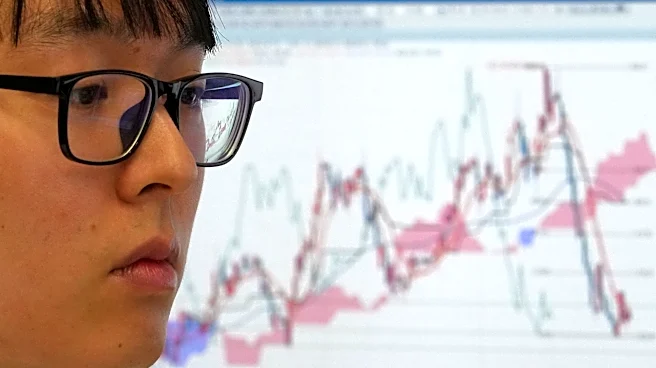
The Nasdaq Composite has experienced notable declines over the past few trading sessions, reflecting broader market volatility. On Tuesday, the index fell 1.5%, following a more than 4% drop on Thursday
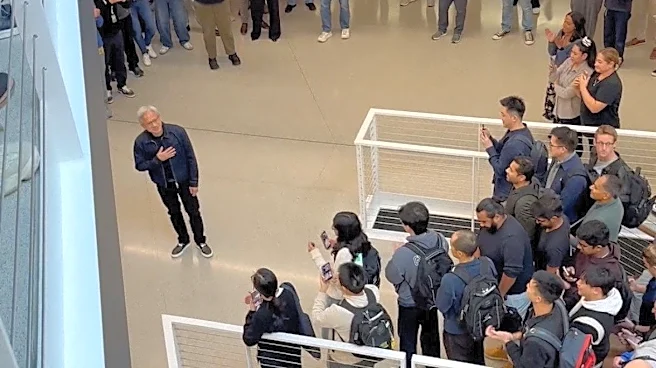
before the Thanksgiving Day holiday. Monday saw another decrease of 1.48%. These movements occurred as all three major U.S. indexes entered correction territory on Friday, indicating a drop of at least 10% from recent highs. While Monday brought a temporary rally, with the Nasdaq Composite jumping 6.5%—its best day since April 2025—the gains were not sustained. Pre-market trading on Tuesday indicated further downward pressure, with Nasdaq-100 futures down 1.61%. The market's fluctuations have been influenced by various factors, including investor reactions to corporate news, such as Nvidia's board reinstating Jensen Huang as CEO, which initially spurred a rally.
Why It's Important?
The recent performance of the Nasdaq Composite is a critical indicator for the U.S. technology sector and the broader economy. Significant drops in the Nasdaq, which is heavily weighted with technology and growth stocks, can signal investor apprehension about future economic conditions or specific industry outlooks. These declines affect investment portfolios, particularly those focused on tech stocks, and can influence consumer and business confidence. The volatility also highlights the challenges investors face in identifying market bottoms, as rapid shifts can occur based on news events or economic data. The S&P 500 and Dow Jones Industrial Average have also experienced similar pressures, indicating a widespread market sentiment of caution or uncertainty, which can impact retirement savings, institutional investments, and overall financial stability.
What's Next?
Market participants will be closely watching for further economic data and corporate earnings reports to gauge the direction of the Nasdaq Composite and other major indices. The ongoing debate among investors is whether the market has reached its bottom or if further declines are imminent. Experts suggest that investors should focus on long-term strategies, such as holding cash, diversifying portfolios, and thinking in multi-year stretches, rather than attempting to time the market's exact lows. Potential factors that could influence future market movements include inflation trends, company earnings performance, and spending patterns in key sectors like artificial intelligence. The market's reaction to these developments will determine whether the current volatility subsides or intensifies in the coming weeks.
Beyond the Headlines
The current market volatility extends beyond immediate price movements, touching upon fundamental investment philosophies. The rapid swings underscore the inherent unpredictability of short-term market behavior, challenging the notion that precise market timing is a viable strategy for most investors. This period serves as a reminder of the importance of robust financial planning, including maintaining adequate cash reserves and a diversified portfolio, to weather significant downturns. The psychological impact on investors, often driven by fear and greed, can lead to irrational decisions, emphasizing the need for discipline and a long-term perspective. Furthermore, the performance of bellwether technology companies within the Nasdaq can reflect broader shifts in technological innovation and adoption, influencing future economic growth trajectories and investment opportunities.