






What's Happening?
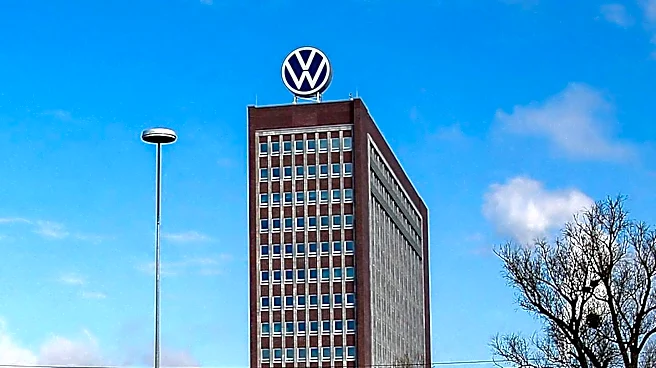
The Volkswagen Group has reported a drastic 98.7% decline in profits for the first nine months of 2026 compared to the same period in 2025, with operating profit falling from €5.4 billion to just €71 million. This significant drop is attributed to declining
sales in China and North America, increased competitive pressure in Europe, and the lower profitability of electric vehicles compared to combustion-engine vehicles. The group also incurred €8.7 billion in one-off costs. In response, Volkswagen is implementing a comprehensive restructuring plan, including the potential closure of up to four factories, a reduction in its model range, and a target of €31 billion in cost savings by 2030. Total vehicle sales across the group are down by 10.6%, with 5.9 million cars sold compared to 6.6 million last year.
Why It's Important?
This severe profit decline and the subsequent restructuring efforts by the Volkswagen Group have significant implications for the global automotive industry, including its U.S. operations. The challenges in North America, alongside China, highlight a broader market shift and increased competition that affects major players. The lower profitability of electric vehicles, despite their market success, indicates a critical financial hurdle for the industry's transition to electrification. For U.S. consumers and the automotive market, this could mean changes in vehicle availability, pricing strategies, and the pace of EV adoption. The restructuring plan, which includes job cuts and factory closures, underscores the intense pressure on traditional automakers to adapt to evolving market demands and economic realities, potentially impacting employment and investment in regions where Volkswagen operates.
What's Next?
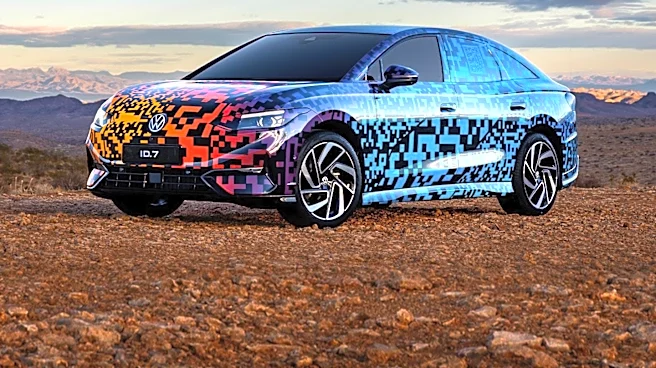
Volkswagen Group's CFO and COO, Arno Antlitz, emphasized the urgency of swift and decisive action to implement the 'Future Plan.' This plan aims to improve profitability through a streamlined model range, simpler structures, improved vehicle costs, lower overheads, greater plant efficiency, and faster technology development, targeting €31 billion in cost savings. The company is bringing new vehicles with state-of-the-art technology to market, with electric vehicles accounting for 40% of its order bank. The success of this restructuring will be crucial for the group's financial stability and its ability to compete effectively in the evolving automotive landscape, particularly in the electric vehicle segment. The company is confident in achieving positive cash flow in Q4 2026.
Beyond the Headlines
The Volkswagen Group's struggles highlight a critical juncture for the automotive industry as it navigates the transition to electric vehicles. While EVs are gaining market traction, their current lower profitability compared to traditional combustion engines poses a significant financial challenge for manufacturers. This situation forces companies to re-evaluate their entire business model, from production efficiency and supply chain management to pricing strategies and market positioning. The impact of U.S. tariffs and shrinking markets further complicates the landscape, pushing automakers to seek innovative solutions and cost-cutting measures. This period of intense transformation could lead to a more consolidated and efficient industry, but also carries risks of job displacement and economic disruption in traditional manufacturing hubs.