
What's Happening?
Delta Air Lines CEO Ed Bastian has outlined the company's 'nuanced' approach to AI agents in the airline sector, emphasizing a cautious strategy focused on monitoring their activity and safeguarding customer
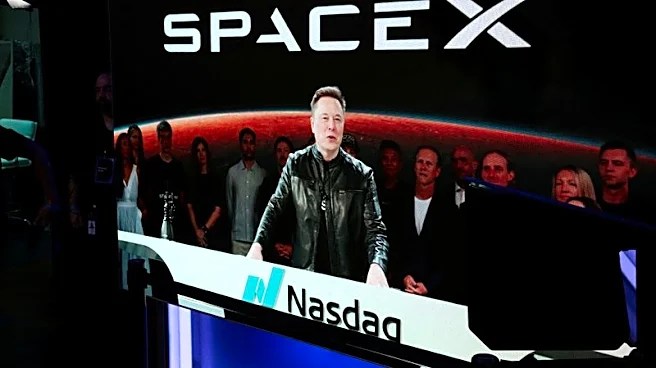
privacy. Unlike some competitors, such as United Airlines, which has blocked unauthorized AI agents, Delta aims to understand how these agents operate before deciding on engagement. Bastian noted that while there is significant discussion around AI agents, their current usage volumes remain modest. He also addressed concerns regarding fuel costs, stating that while Delta has largely maintained its profit margins despite high oil prices, it is too early to declare that the 'fuel shock' is over, indicating a potential for further price increases. Additionally, Bastian defended Delta's decision to partner with Amazon's Leo for inflight connectivity, despite criticism from SpaceX CEO Elon Musk regarding the airline's refusal to provide Starlink internet.
Why It's Important?
Delta's cautious stance on AI agents highlights a growing industry-wide debate about the balance between technological innovation and customer privacy in the travel sector. By prioritizing user privacy and a measured approach, Delta aims to mitigate potential risks associated with AI, such as data breaches or misuse of customer information, which could have significant reputational and financial consequences. The airline's strategy could influence how other major U.S. carriers adopt and regulate AI technologies, potentially setting a precedent for industry standards. Furthermore, Bastian's warning about ongoing fuel cost volatility underscores a critical economic challenge for the airline industry. Fluctuating oil prices directly impact operational costs, which can lead to higher ticket fares for consumers and affect airline profitability, thereby influencing travel demand and the broader U.S. economy.
What's Next?
Delta Air Lines will continue to monitor the activity of AI agents and refine its strategy for engagement, potentially leading to new policies or technological integrations that balance innovation with privacy. The airline's ongoing partnership with Amazon's Leo for inflight connectivity is expected to roll out over the next 18 months, which could enhance customer experience and differentiate Delta from competitors. The airline will also need to navigate the persistent challenge of fuel price volatility, which may necessitate adjustments to pricing strategies or operational efficiencies to maintain profitability. The broader airline industry will likely observe Delta's approach to AI and fuel costs, potentially adopting similar strategies or developing alternative solutions in response to these evolving challenges.
Beyond the Headlines
Delta's 'nuanced' approach to AI agents reflects a broader ethical and regulatory challenge facing industries adopting advanced AI. The tension between leveraging AI for efficiency and protecting individual privacy is a critical issue that extends beyond the airline sector, impacting data governance, consumer trust, and regulatory frameworks. The airline's emphasis on understanding AI agent behavior before full integration suggests a proactive stance on responsible AI development, which could become a benchmark for corporate responsibility. Moreover, the ongoing debate over inflight connectivity providers, exemplified by the Delta-Amazon partnership versus SpaceX's Starlink, highlights the competitive landscape in aerospace technology and the strategic decisions companies make to enhance customer experience and operational capabilities.