



What's Happening?
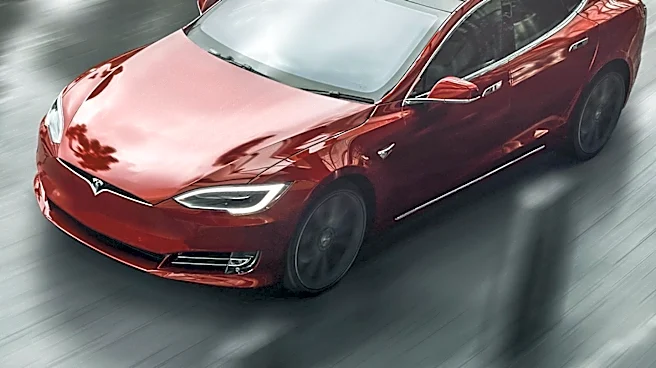
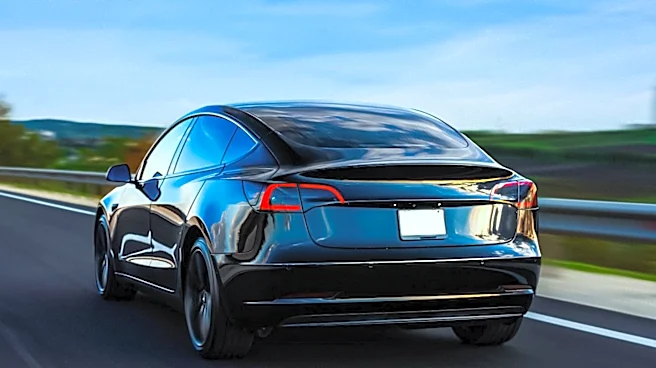
Tesla has expanded its robotaxi service to Orlando and Tampa, marking a significant step in its efforts to scale its autonomous ride-hailing business. This expansion comes just before Tesla's second-quarter earnings report, which is closely watched by
Wall Street for updates on the robotaxi service. Tesla's robotaxi system, unlike competitors such as Waymo, uses cameras and AI-based software for navigation. The company plans to eventually deploy its Cybercab vehicle, which lacks pedals and a steering wheel. Tesla's cautious approach to expansion, focusing on rigorous safety testing, has been a point of discussion among investors, especially after missing several expansion targets. The service, which began in Austin, has already expanded to Dallas, Houston, and Miami, with supervised testing in California's San Francisco Bay Area.
Why It's Important?
The expansion of Tesla's robotaxi service is crucial as it represents a significant part of the company's valuation and future strategy, focusing on artificial intelligence and autonomous driving. This move could potentially reshape the ride-hailing industry by introducing fully autonomous vehicles, reducing the need for human drivers, and potentially lowering costs. For Tesla, successful deployment and scaling of this service could solidify its leadership in the autonomous vehicle market, attract more investors, and increase its market share. However, the cautious rollout and rigorous safety testing highlight the challenges and regulatory hurdles in achieving full autonomy, which could impact the pace of adoption and Tesla's financial performance.
What's Next?
Tesla's next steps involve continuing the expansion of its robotaxi service while ensuring safety and regulatory compliance. The company is likely to focus on increasing the number of cities where the service is available and improving the technology to ensure reliability and safety. Stakeholders, including investors and regulatory bodies, will be closely monitoring Tesla's progress and any updates on the deployment of the Cybercab vehicle. The outcome of Tesla's second-quarter earnings report could also influence investor sentiment and future investment in the company's autonomous driving initiatives.