




What's Happening?
The Saudi Maritime & Logistics Congress has announced its 2026 edition, scheduled for October 21-22 at the Jeddah Superdome, under the patronage of His Excellency Saleh Bin Nasser Al-Jasser, Minister of Transport and Logistics Services. The event will
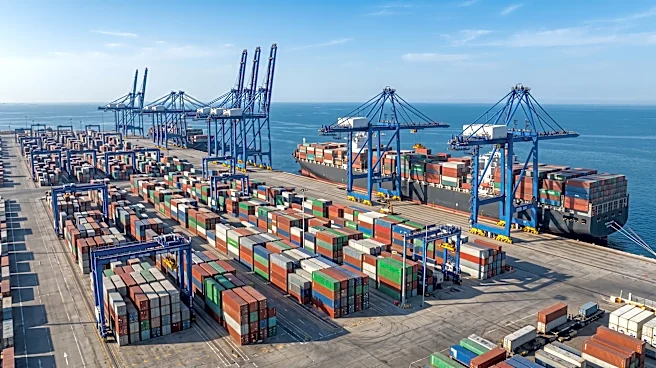
feature over 200 exhibiting companies showcasing maritime equipment, port technology, and logistics services. More than 120 speakers will participate across five tracks: trade corridors, port competitiveness, energy transition, infrastructure investment, and maritime security. Key industry figures, including Poul Hestbæk, chief executive of Folk Maritime, and Jay New, chief executive of King Abdullah Port, will discuss long-term commercial decisions, resilience, route planning, and the evolving needs of shipping lines and cargo owners. The congress comes as Saudi Arabia continues to expand its ports and logistics network, with ports overseen by Mawani handling 8.32 million TEUs in 2025, a 10.58% year-on-year increase, and transshipment volumes rising by 11.78%.
Why It's Important?
The Saudi Maritime & Logistics Congress 2026 is significant for the global maritime industry, including U.S. stakeholders, as it addresses critical issues shaping international trade and supply chains. Saudi Arabia's ambitious expansion of its ports and logistics network, aiming to be among the top ten logistics economies by 2030, will directly impact global shipping routes and trade dynamics. Enhanced port capacity and efficiency in the Middle East can offer alternative or supplementary trade corridors, potentially affecting transit times and costs for U.S. imports and exports. Discussions on energy transition and infrastructure investment at the congress highlight the industry's move towards sustainability and modernization, which could influence global standards and technological adoption, impacting U.S. maritime and logistics companies. Furthermore, the focus on resilience and risk management in trade blocs is crucial for U.S. businesses navigating complex geopolitical landscapes and seeking stable supply chains. U.S. technology providers and investors may find opportunities in Saudi Arabia's drive for digital transformation and infrastructure development in its logistics sector.
What's Next?
Following the Saudi Maritime & Logistics Congress 2026, it is expected that Saudi Arabia will continue to accelerate its National Transport and Logistics Strategy, with potential announcements of new projects and partnerships in port development, logistics hubs, and technological integration. The insights and collaborations fostered at the congress could lead to concrete investments in green shipping technologies and advanced port automation. Industry leaders and policymakers will likely use the discussions to refine strategies for navigating shifting trade routes and adopting new fuels. For U.S. companies, this could mean increased opportunities for collaboration in areas like port technology, sustainable shipping solutions, and logistics management systems. The congress's outcomes may also influence global shipping alliances and trade agreements, as Saudi Arabia strengthens its position as a key logistics player. Continued growth in Saudi port volumes suggests ongoing demand for international shipping services and related infrastructure.
Beyond the Headlines
The Saudi Maritime & Logistics Congress reflects a broader strategic pivot by Saudi Arabia to diversify its economy beyond oil, positioning itself as a global logistics hub. This ambition has profound implications for global trade patterns, potentially shifting the balance of power in maritime logistics. The emphasis on resilience and route planning underscores the increasing fragility of global supply chains, prompting a re-evaluation of traditional shipping lanes and the development of more robust alternatives. This could lead to a more distributed and less concentrated global shipping network, offering greater stability but also introducing new complexities for international trade. The congress also highlights the growing importance of the Middle East as a nexus for East-West trade, potentially drawing more investment and operational focus from global shipping giants. The drive for energy transition within the maritime sector, as discussed at the event, could accelerate the adoption of alternative fuels and sustainable practices worldwide, pushing the U.S. and other nations to keep pace with these environmental and technological advancements.