






What's Happening?
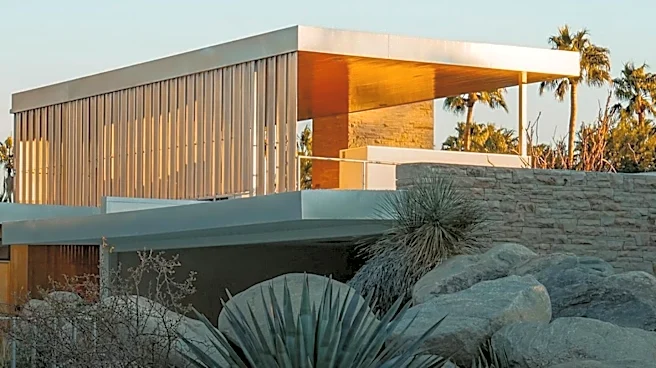
Architects in Arizona are designing innovative homes that effectively manage the region's intense heat while integrating with the dramatic desert landscape. These designs often incorporate principles of desert modernism, focusing on materials and forms
that provide natural cooling and frame scenic views. Examples include a Phoenix home by Darren Petrucci with a 'long, bent bar' massing and dark interiors to reduce glare, a multi-generational dwelling by Benjamin Hall using concrete masonry units for insulation, and Scott Pask's modernized 1960s brick residence near Tucson. Wendell Burnette Architects designed a Cave Creek home with stainless steel cladding that reflects the saguaro-dotted terrain, and a residential complex in Phoenix by Johnston Marklee features green glass and metal, evoking cacti and providing a distinct urban presence.
Why It's Important?
The architectural innovations in Arizona are crucial for sustainable living in arid climates, offering solutions to extreme heat that can be replicated in other hot regions globally. These designs prioritize energy efficiency and comfort, reducing the reliance on artificial cooling systems and lowering energy consumption. This is particularly significant in the U.S. Southwest, which faces increasing temperatures due to climate change. The integration of homes with the natural environment also promotes a deeper appreciation for the unique desert ecosystem, influencing urban planning and conservation efforts. Furthermore, these projects showcase how modern design can be both functional and aesthetically pleasing, contributing to the evolution of regional architectural styles and potentially setting new standards for residential development in challenging climates.
What's Next?
As climate change continues to impact global temperatures, the demand for heat-resilient architectural solutions is expected to grow. Arizona's innovative designs could serve as a blueprint for future residential and commercial developments in other hot and arid regions. Further research and development in sustainable building materials and passive cooling techniques are likely to emerge, building upon these existing examples. There may also be an increased focus on landscape design that complements these structures, utilizing drought-resistant plants and water-efficient irrigation systems. The success of these projects could influence building codes and urban planning policies, encouraging more widespread adoption of climate-responsive architecture and promoting a more sustainable approach to construction in challenging environments.
Beyond the Headlines
Beyond their practical benefits, these Arizona homes represent a philosophical approach to living in harmony with nature, rather than in opposition to it. They challenge conventional notions of comfort and aesthetics, demonstrating that sustainable design can be both luxurious and deeply connected to its environment. The use of local materials and the framing of natural views foster a sense of place and belonging, encouraging residents to engage with the unique beauty of the desert. This architectural movement also highlights the importance of interdisciplinary collaboration, combining engineering, environmental science, and artistic vision to create spaces that are both resilient and inspiring. It underscores a growing awareness of our ecological footprint and the potential for design to mitigate environmental challenges while enhancing human well-being.