








What's Happening?
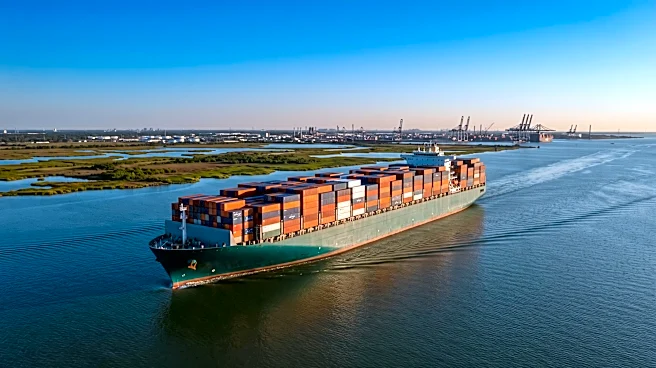
Port Houston has announced the completion of its segments of Project 11, a significant expansion of the Houston Ship Channel. This undertaking involved widening the Galveston Bay reach of the channel by 170 feet (52 meters) to a total of 700 feet (213
meters). The project also included extensive environmental restoration efforts, creating 10 acres of bird islands, 324 acres (131 hectares) of oyster reefs, and 800 acres (324 hectares) of marsh habitat using dredged material. These improvements have already led to operational benefits, with restrictions on daylight transits for larger vessels eased in 2025 along the widened section. Port Houston chief executive Charlie Jenkins highlighted the collaborative effort between their team, the U.S. Army Corps of Engineers, industry partners, and elected leaders in bringing this ambitious plan to fruition. The project was accelerated through a funding agreement between Port Houston and industry partners, with additional support from federal sources, including over $140 million secured through the Infrastructure Investment and Jobs Act, as noted by U.S. Representative Lizzie Fletcher.
Why It's Important?
The completion of Port Houston's segments of Project 11 is crucial for enhancing the efficiency and safety of the nation's busiest waterway. The widening of the Houston Ship Channel is expected to increase vessel movements, reduce waiting times for ships, and strengthen overall supply chain efficiency. This is particularly vital for accommodating future demand for energy exports, petrochemicals, and international cargo, which are significant components of the U.S. economy. The improved navigation safety will mitigate risks associated with larger vessels transiting the channel, benefiting maritime commerce and reducing potential environmental hazards. Furthermore, the project's environmental restoration components, such as the creation of bird islands, oyster reefs, and marsh habitats, demonstrate a commitment to ecological preservation alongside economic development. The involvement of federal funding, specifically through the Infrastructure Investment and Jobs Act, underscores the national importance of this infrastructure upgrade and its potential to support economic growth and environmental sustainability in the region.
What's Next?
While Port Houston has completed its portions of Project 11, work led by the U.S. Army Corps of Engineers remains ongoing to finalize the wider program. The continued efforts will focus on completing the remaining segments of the expansion, further enhancing navigation safety and environmental capacity. The operational benefits already observed, such as eased daylight transit restrictions for larger vessels, are expected to expand as the entire project progresses. Stakeholders, including Port Houston, the U.S. Army Corps of Engineers, and industry partners, will likely continue their collaboration to ensure the successful conclusion of the project. The long-term goal is to fully accommodate the growing demands of energy exports, petrochemicals, and international cargo, which will necessitate ongoing monitoring and potential future adjustments to maintain optimal channel performance and environmental stewardship. The successful implementation of this project could also serve as a model for other major port expansions across the U.S., demonstrating the effectiveness of public-private partnerships and federal investment in critical infrastructure.
Beyond the Headlines
The Project 11 expansion of the Houston Ship Channel represents more than just a physical enlargement of a waterway; it signifies a strategic investment in the long-term economic competitiveness and environmental resilience of a critical U.S. port. The integration of significant environmental restoration efforts, such as the creation of extensive wildlife habitats, highlights a growing trend in infrastructure development to balance economic imperatives with ecological responsibility. This approach sets a precedent for future large-scale projects, emphasizing that economic growth does not have to come at the expense of the environment. The project's success, achieved through a partnership between government agencies and private industry, also underscores the effectiveness of collaborative models in addressing complex infrastructure challenges. Furthermore, the enhanced capacity and safety of the channel will have ripple effects across various sectors, from energy and manufacturing to logistics and international trade, solidifying the Houston region's role as a vital hub in the global supply chain and contributing to national economic stability.