







What's Happening?
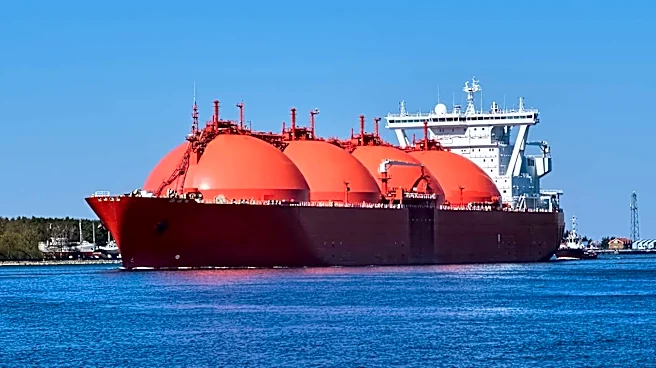
Qatar is reportedly moving six empty liquefied natural gas (LNG) tankers towards the Gulf, signaling potential preparations by QatarEnergy to restart LNG loadings. Ship-tracking data from Kpler indicates these tankers, linked to Iran, are currently in or approaching
the Gulf of Oman. Another tanker recently crossed the Strait of Hormuz and is heading towards the Qatari coast. This movement follows a period of curtailed LNG exports from Qatar, the world's third-largest exporter, after Iranian strikes on the Ras Laffan complex and ongoing disruptions in the Strait of Hormuz. QatarEnergy had previously informed customers in June that it could restore approximately 50% of its production capacity within a month and 80% within two months, provided safe navigation through the Strait of Hormuz was re-established.
Why It's Important?
The potential restart of Qatar's LNG exports holds significant implications for global energy markets, particularly given the current geopolitical tensions and disruptions in key shipping lanes. Qatar is a major global supplier of LNG, and its absence or reduced capacity can impact global supply, prices, and energy security for importing nations. The movement of these tankers suggests a possible easing of the operational challenges that have hampered Qatar's exports, including the safety concerns in the Strait of Hormuz. A resumption of full or near-full capacity from Qatar would help stabilize global LNG supplies and potentially alleviate upward pressure on energy prices. Conversely, continued disruptions or further delays in restarting exports could exacerbate existing energy market volatility and create challenges for countries reliant on Qatari LNG.
What's Next?
The immediate next step will be to observe whether these tankers proceed to load LNG and successfully navigate out of the Gulf, particularly through the Strait of Hormuz. The successful passage of these vessels would indicate a significant step towards the full resumption of Qatar's LNG exports. Market participants will closely monitor shipping data and official announcements from QatarEnergy regarding the status of its production and export operations. The ongoing geopolitical situation in the region, particularly concerning Iran and the United States, will remain a critical factor influencing the safety and reliability of shipping routes like the Strait of Hormuz. Any further incidents or escalations could again disrupt these plans and impact global energy markets.
Beyond the Headlines
The situation surrounding Qatar's LNG exports highlights the intricate link between geopolitical stability and global energy supply chains. The Strait of Hormuz, a critical chokepoint for a significant portion of the world's oil and gas, remains highly vulnerable to regional conflicts. The challenges faced by Qatar in exporting its LNG underscore the broader risks to energy security posed by instability in the Middle East. This scenario could accelerate efforts by importing nations to diversify their energy sources and supply routes, potentially leading to increased investment in alternative LNG projects or renewable energy. Furthermore, it emphasizes the strategic importance of maritime security and the need for international cooperation to ensure the free flow of energy resources through vital waterways, impacting global economic stability and international relations.