






What's Happening?
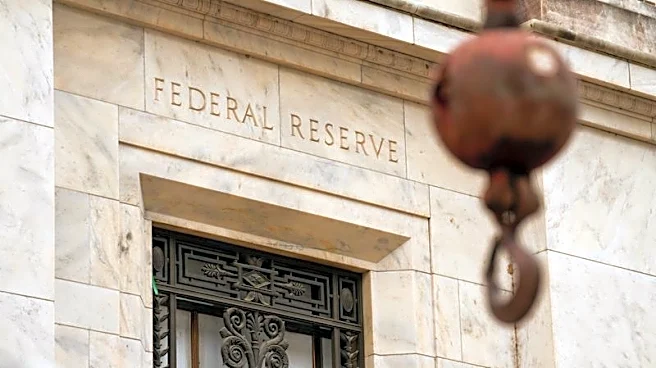
The Federal Reserve's potential rate hike concerns were alleviated as inflation cooled more than expected in June. The Consumer Price Index (CPI) fell by 0.4% for the month, with core inflation holding steady at 2.6% year-over-year. This unexpected decline
in inflation, coupled with a decrease in producer prices, shifted market expectations significantly. Initially, a spike in oil prices due to U.S. actions in the Strait of Hormuz had increased the likelihood of a rate hike, with CME FedWatch indicating a 46.5% probability. However, the cooler inflation data reversed this trend, bringing the probability of a rate hike back down to 13%. This development is crucial for middle-market borrowers who rely on floating-rate loans, as it suggests that the Federal Reserve may maintain its current federal funds target range of 3.50% to 3.75%.
Why It's Important?
The easing of inflation and the subsequent reduction in rate hike expectations have significant implications for the U.S. economy. For businesses and consumers, stable interest rates mean lower borrowing costs, which can support economic growth. The financial markets also reacted positively, with equities stabilizing after initial volatility. For middle-market lenders, the situation underscores the importance of monitoring geopolitical events and economic data closely, as these factors can rapidly influence monetary policy expectations. The Federal Reserve's decision-making process remains data-dependent, highlighting the need for businesses to remain agile in their financial planning.
What's Next?
Looking ahead, the Federal Reserve's next meeting on July 29 will be closely watched for any changes in monetary policy. Market participants will continue to monitor economic indicators, such as employment data and further inflation reports, to gauge the likelihood of future rate adjustments. Additionally, geopolitical developments, particularly in the Middle East, could impact oil prices and, consequently, inflation expectations. Businesses and investors should prepare for potential volatility in financial markets as these factors unfold.