
What's Happening?
Engineering technology company HBK has identified reliability as the next significant challenge for the robotics industry, despite considerable advancements in artificial intelligence, sensing, and control
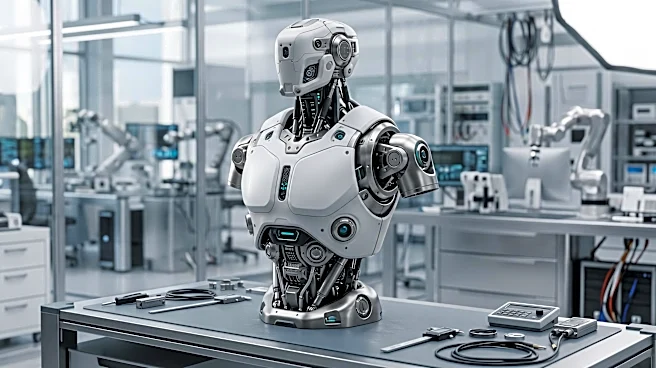
systems. In their article, 'Why Reliability Will Define the Next Decade of Robotics,' HBK emphasizes that commercial success for robots, ranging from humanoid models to warehouse automation and surgical systems, hinges on their ability to perform tasks consistently, safely, and predictably over millions of operating cycles. The complexity is particularly acute for humanoid robots, where the failure of a single subsystem can compromise the entire machine. Some developers are now integrating Design for Reliability (DfR) methodologies, utilizing software like HBK’s ReliaSoft, to identify potential weaknesses at both component and system levels early in the development process.
Why It's Important?
The focus on reliability is crucial for the U.S. robotics industry, impacting its growth, adoption, and competitive standing. Unreliable robots can lead to significant operational costs, safety concerns, and a lack of trust from consumers and businesses. For industries like manufacturing, logistics, and healthcare, where robots are increasingly deployed, consistent performance is paramount for productivity and patient safety. Companies that can demonstrate superior reliability will gain a competitive edge, influencing market share and investment. This shift towards DfR methodologies signifies a maturing industry, moving beyond proof-of-concept to practical, scalable, and dependable solutions. The ability to analyze reliability across large robotic fleets, as highlighted by HBK, is vital for large-scale deployments in warehouse automation and other sectors.
What's Next?
The robotics industry is expected to increasingly prioritize reliability engineering throughout the design and development lifecycle. This will likely involve greater investment in specialized software and methodologies for reliability assessment and prediction. Collaboration between robotics developers and engineering technology companies like HBK will become more common to integrate DfR principles from the outset. Furthermore, operational data collected from sensors on deployed robots will play a more significant role in refining designs and maintenance strategies. As reliability becomes a key differentiator, regulatory bodies may also begin to establish more stringent standards for robotic systems, particularly in critical applications like medical robotics, to ensure safety and performance. The industry will likely see a push for more robust testing and validation protocols.
Beyond the Headlines
The emphasis on reliability in robotics extends beyond mere functionality; it touches upon broader societal implications, including public trust and the ethical deployment of autonomous systems. As robots become more integrated into daily life and critical infrastructure, their dependability directly impacts human safety and well-being. A lack of reliability could lead to public skepticism, hindering adoption and potentially sparking calls for stricter oversight. This challenge also highlights the evolving nature of engineering, where the focus is shifting from simply creating advanced capabilities to ensuring their sustained and safe operation in complex, real-world environments. The long-term success of the robotics revolution will depend not just on innovation, but on the industry's ability to build machines that people can consistently depend on.