
What's Happening?
Santorini, a Greek island, is characterized by its Mediterranean climate, featuring hot, dry summers and mild, wet winters. The island's volcanic history has significantly shaped its landscape, leading
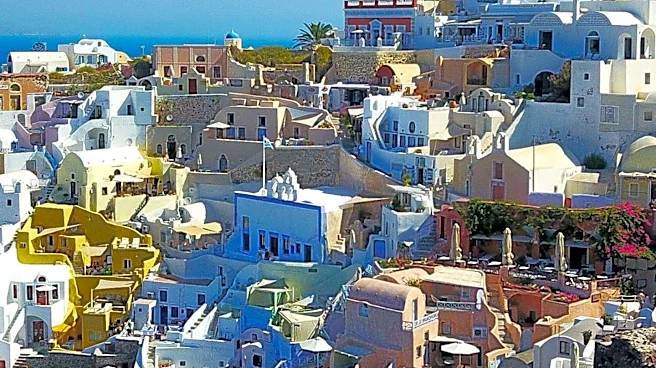
to the formation of a caldera where terraced homes and windmills are situated. This volcanic activity has also contributed to the island's unique agricultural products, particularly grapes used for wine production. Key attractions include the ancient Minoan site of Akrotiri, as well as distinctive beaches like the black-sand Kamari and the red volcanic Red Beach. The island experiences a northern wind known as the Meltemi, which provides some cooling during the hotter summer months. Visitors are advised that September and October generally offer the best balance of warm weather and fewer crowds, while July is typically the hottest month.
Why It's Important?
Santorini's unique geological and climatic features make it a significant destination for tourism, impacting the travel and hospitality industries. The island's volcanic past not only creates striking landscapes but also influences its agricultural output, particularly its wine industry, which can be a draw for culinary tourism. The distinction between peak and off-peak seasons, driven by weather and crowd levels, affects pricing and visitor experience, influencing travel planning and economic activity for local businesses. The advice regarding water consumption and plumbing highlights practical considerations for tourists, which can impact local infrastructure and public health efforts. The island's blend of natural beauty, historical sites, and unique cultural offerings contributes to its global appeal as a Mediterranean getaway.
What's Next?
For those planning a visit, the upcoming months will continue to offer the Mediterranean climate, with September and October being highlighted as ideal for avoiding peak summer crowds while still enjoying warm weather and calm seas. Travelers should consider booking accommodations and flights in advance, especially if aiming for the popular summer period, to secure better rates and availability. The island's various attractions, including its volcanic crater, hot springs, and unique beaches, will remain accessible, with boat tours often available to explore these features. Local businesses, including wineries and restaurants, will continue to cater to tourists, adapting their services to seasonal demand. Visitors are encouraged to be mindful of local customs, such as not flushing toilet paper, to help maintain the island's infrastructure.
Beyond the Headlines
The enduring appeal of Santorini extends beyond its immediate tourist attractions, touching upon broader themes of sustainable tourism and cultural preservation. The island's delicate ecosystem, shaped by its volcanic origins, requires careful management to balance tourism growth with environmental protection. The preservation of ancient sites like Akrotiri underscores the importance of archaeological heritage and its role in attracting visitors interested in history and culture. The local wine industry, benefiting from the unique volcanic soil, represents a connection between the island's natural resources and its economic identity. The seasonal fluctuations in tourism also raise questions about the long-term economic stability of the island, prompting discussions on diversifying attractions and promoting off-season travel to ensure year-round viability for local communities.