
What's Happening?
A 1977 photograph of Jamie Lee Curtis in her Beverly Hills living room reveals a subtly floral-patterned sofa, which Homes & Gardens highlights as a timeless retro staple. Despite being 48 years old, the
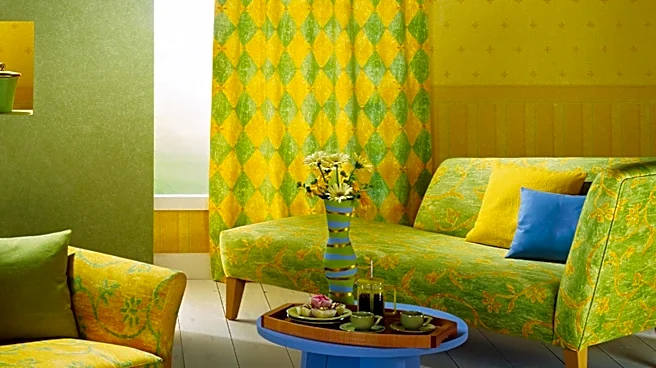
sofa's look is considered just as relevant for a living room in 2026. Design experts note that patterned sofas are experiencing a resurgence in popularity, driven by a growing demand for more characterful and colorful interiors. Magdalena Gierasinska, Design Expert at Barker and Stonehouse, advises consumers to choose classic patterns like florals or stripes for longevity, as these designs have stood the test of time. She also points out the practical benefits of patterned sofas, such as their ability to be more forgiving of stains, making them suitable for homes with children or pets.
Why It's Important?
The enduring appeal of Jamie Lee Curtis's patterned sofa underscores a significant shift in home decor trends towards timelessness and individuality over fleeting fads. This movement encourages consumers to invest in pieces that offer both aesthetic longevity and practical benefits, such as stain resistance. The expert advice to choose classic patterns and consider the long-term investment of a sofa promotes more sustainable consumption habits in the home furnishings market. By highlighting how a 1970s design remains stylish today, the article challenges the notion of constantly updating decor, advocating for thoughtful choices that contribute to a more personal and enduring living space. This trend can also empower consumers to embrace bolder design choices with confidence, knowing that well-chosen patterns can remain relevant for decades.
What's Next?
The renewed interest in patterned sofas and retro decor suggests that consumers will continue to seek out unique and characterful pieces for their homes. We can expect to see more design experts and brands promoting classic patterns and durable furnishings as a long-term investment. Retailers may expand their offerings of patterned fabrics and furniture, catering to a desire for personalized and less disposable home environments. There might also be an increase in content providing guidance on how to integrate vintage or retro pieces into modern settings, emphasizing balance and cohesion. This trend could lead to a more eclectic and less uniform approach to interior design, where individual expression and sustainability are prioritized.
Beyond the Headlines
The fascination with Jamie Lee Curtis's patterned sofa goes beyond mere interior design; it touches upon a broader cultural appreciation for authenticity and personal history within the home. In an age of digital replication and mass production, a unique, patterned sofa can serve as a focal point that reflects personality and tells a story. This trend challenges the minimalist aesthetic that has dominated for years, suggesting a return to warmth, texture, and visual interest in living spaces. It also highlights how celebrity influence can shape consumer preferences, even decades after an image is captured. Ultimately, the enduring appeal of such a piece speaks to a human desire for comfort, individuality, and a sense of rootedness in one's environment, transforming a functional item into a statement of personal style and a connection to the past.