




What's Happening?
Honda is significantly increasing its commitment to hybrid vehicles, with plans to introduce 15 new gas-electric models by March 2030, primarily targeting the North American market. This strategic pivot comes as the company aims to capitalize on surging
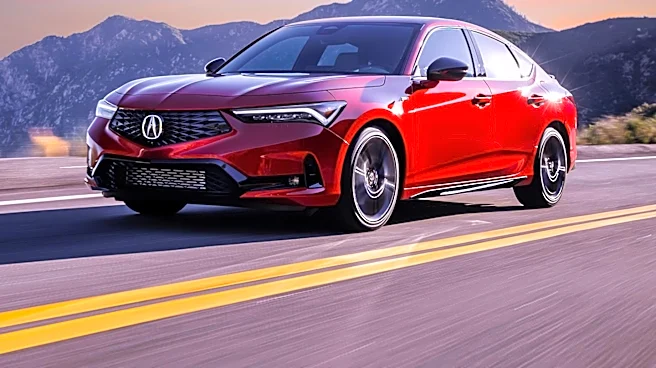
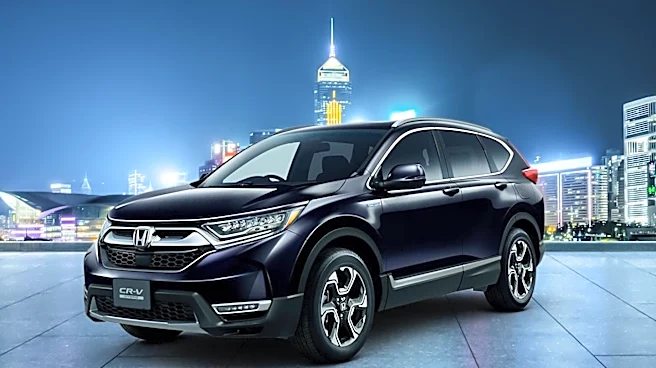
global demand for hybrids and follows substantial financial setbacks from earlier electric vehicle (EV) investments. According to The Japan Times, Honda incurred a ¥2.5 trillion ($15.7 billion) impairment charge and its first-ever annual loss due to these EV investments. In response, Honda is investing $3 billion in a new factory in Ohio dedicated to producing next-generation hybrids. The company is also developing new gas-electric options for its popular large SUVs in the U.S., such as the Pilot and Acura MDX, to strengthen its foothold in this segment where its market share lags competitors. While the new Avancier SUV will be a flagship hybrid for the Asia-Pacific region, it will not be sold in the U.S.
Why It's Important?
This strategic shift by Honda holds significant implications for the U.S. automotive market and consumer choices. By focusing on hybrids, Honda is responding to current consumer preferences and market trends, where EV adoption has been uneven. This move could intensify competition within the hybrid segment, potentially leading to more diverse and advanced hybrid options for American consumers. The $3 billion investment in an Ohio plant underscores Honda's commitment to manufacturing in the U.S., which could create jobs and boost the local economy. For consumers, the introduction of new hybrid versions of popular large SUVs like the Pilot and Acura MDX offers more fuel-efficient alternatives without requiring a full transition to EVs. This strategy also reflects a broader industry trend where Japanese and South Korean automakers are benefiting from renewed hybrid demand, challenging the narrative that EVs are the sole future of automotive technology in the short to medium term.
What's Next?
Honda's immediate next steps involve the continued development and rollout of its 15 new gas-electric models, with a strong emphasis on the North American market by March 2030. The construction and operationalization of the new $3 billion Ohio plant will be a key focus, as it will be central to producing these next-generation hybrids. Consumers can anticipate new hybrid variants of existing popular Honda and Acura SUVs in the U.S. market. While Honda is prioritizing hybrids, Bloomberg Intelligence analyst Tatsuo Yoshida notes that the company cannot entirely abandon EV investments, especially given their growing importance in markets like Europe, Southeast Asia, India, and China. Therefore, Honda will likely continue to balance its hybrid expansion with strategic, albeit perhaps more cautious, EV development to avoid being left behind if market conditions shift again. The success of these new hybrid offerings in the U.S. will be closely watched by competitors and could influence future investment decisions across the automotive industry.
Beyond the Headlines
Honda's pivot towards hybrids highlights a complex interplay of market realities, technological evolution, and consumer behavior in the automotive industry. This move suggests a recalibration of long-term electrification strategies, acknowledging that a rapid, universal shift to EVs faces significant hurdles, including infrastructure limitations, cost, and consumer range anxiety. The substantial impairment charge Honda faced from its earlier EV investments serves as a cautionary tale for other manufacturers about the risks of aggressive, singular bets on emerging technologies without sufficient market readiness. Ethically, this strategy allows Honda to offer more environmentally friendly options than traditional gasoline vehicles while providing a more accessible transition for consumers not yet ready for full EVs. This pragmatic approach could also influence public policy discussions around emissions standards and incentives, potentially leading to a more nuanced view of hybrid technology's role in achieving climate goals, rather than solely focusing on battery electric vehicles.