






What's Happening?
Herbert Diess, former CEO of Volkswagen Group and current supervisory board member at Infineon and chairman of The Mobility House, is promoting bidirectional charging technology for electric vehicles (EVs) as a solution to strengthen Germany's automotive
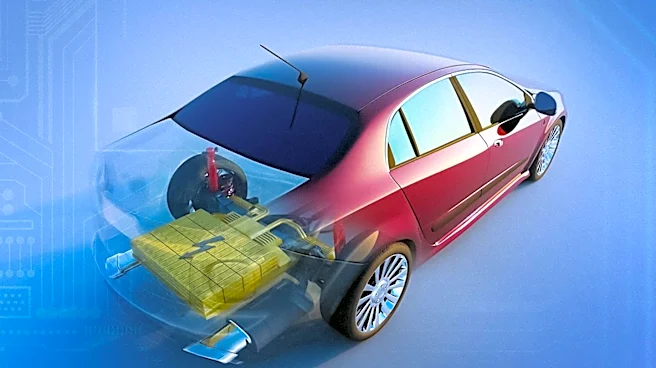
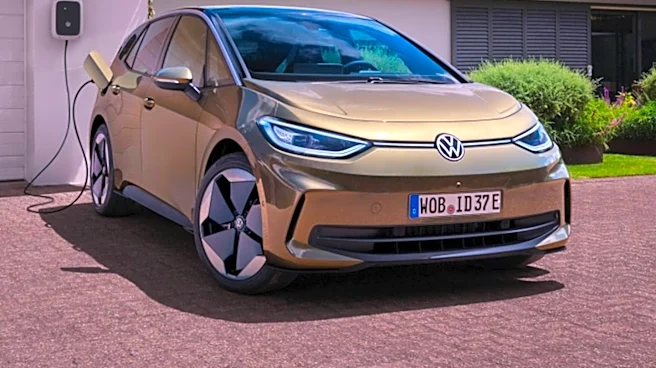
sector. Diess argues that a 2,000-euro bidirectional wallbox, which his company plans to release in 2027, could pay for itself within approximately one year. This technology allows EVs to not only draw power from the grid but also feed stored electricity back into it, particularly during peak demand hours. He highlights that the average EV in Germany drives only about 30 kilometers daily, leaving over 90% of its battery capacity unused. By utilizing this idle capacity, EVs could charge when electricity is cheap (e.g., during midday solar peaks) and sell power back during expensive evening hours. This concept is already being implemented in some U.S. vehicles, such as Ford's F-150 Lightning, which can power homes during outages. Diess's proposal extends this idea to daily participation in the electricity market.
Why It's Important?
The widespread adoption of bidirectional charging in the U.S. could significantly impact energy infrastructure and consumer behavior. For EV owners, it offers a potential new revenue stream or substantial savings on electricity bills, especially for those with solar panels or flexible electricity plans. This could accelerate EV adoption by making ownership more economically attractive. From a broader perspective, a network of bidirectional EVs could act as a massive distributed energy storage system, stabilizing the grid by absorbing excess renewable energy and supplying power during demand spikes. This would reduce reliance on traditional, often fossil-fuel-based, peaker plants, contributing to grid resilience and decarbonization efforts. Utilities might need to adapt their pricing structures and infrastructure to support vehicle-to-grid (V2G) capabilities, potentially leading to new business models and partnerships between automotive and energy sectors. The technology could also enhance energy independence for households and communities, providing backup power during outages.
What's Next?
The future of bidirectional charging in the U.S. will likely involve continued pilot programs by utilities and further integration of V2G capabilities into new EV models. Consumers should inquire about their EV's bidirectional compatibility and their utility's time-of-use electricity rates, as these factors heavily influence the financial benefits. Regulatory frameworks will need to evolve to support and incentivize V2G technology, potentially addressing concerns about grid stability and fair compensation for power supplied by EVs. The long-term impact on battery degradation from constant charging and discharging will also require more independent, real-world data over extended periods. As the technology matures and regulatory hurdles are addressed, the U.S. could see a significant shift in how EVs are perceived and utilized, moving beyond mere transportation to become integral components of the energy ecosystem. Collaboration between automakers, utility companies, and policymakers will be crucial for successful implementation.
Beyond the Headlines
The deeper implications of bidirectional charging extend to energy democracy and the decentralization of power generation. By enabling individual EV owners to participate actively in the energy market, this technology could empower consumers and reduce the dominance of large utility companies. It also raises ethical questions about data privacy, as V2G systems would require detailed monitoring of energy consumption and supply. Furthermore, the concept challenges traditional notions of vehicle ownership, transforming cars from passive assets into active contributors to household and national energy security. The success of V2G could also spur innovation in smart home technology and energy management systems, creating a more interconnected and efficient energy landscape. This shift could foster a more sustainable energy future, where renewable energy sources are more effectively integrated into the grid, and energy waste is minimized through intelligent demand-response mechanisms.