






What's Happening?
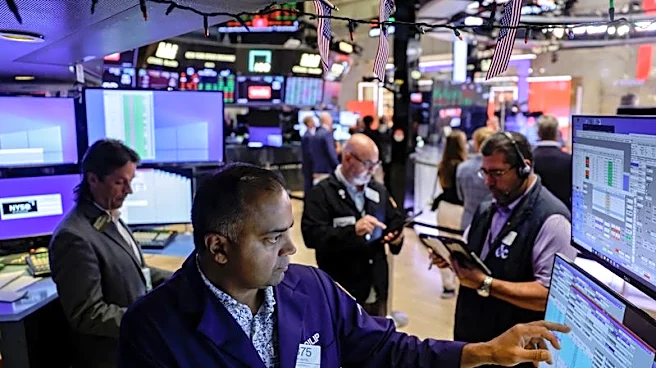
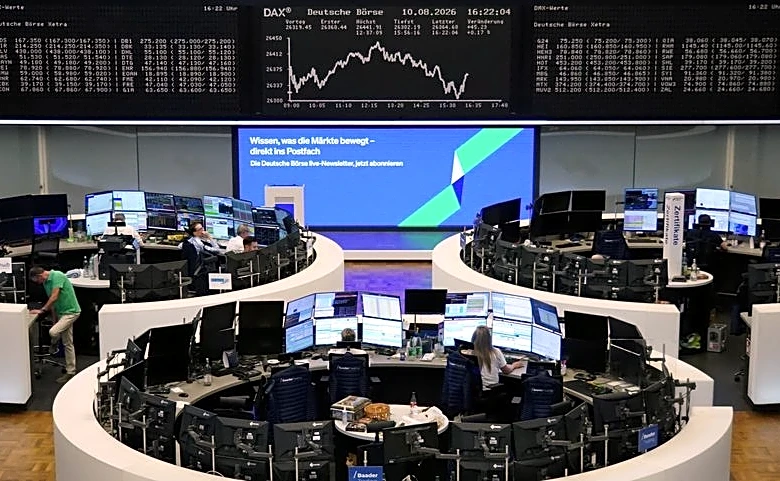
U.S. stocks experienced a slight decline as oil prices continued to fluctuate due to ongoing geopolitical tensions. The S&P 500 fell by 0.3%, marking a second consecutive drop since reaching an all-time high. The Dow Jones Industrial Average and the Nasdaq
composite also saw declines. The volatility in oil prices is attributed to the conflict involving the United States, Israel, and Iran, which has disrupted the flow of crude oil through the Strait of Hormuz. This has led to erratic movements in oil prices, with Brent crude briefly surpassing $90 per barrel before settling at $88.91. The uncertainty surrounding oil prices has contributed to inflationary pressures, with the average cost of gasoline rising significantly compared to the previous year.
Why It's Important?
The fluctuations in oil prices and the resulting inflationary pressures are critical for the U.S. economy. Higher oil prices can lead to increased costs for consumers and businesses, potentially slowing economic growth. Inflation concerns are also influencing the Federal Reserve's monetary policy decisions. The upcoming inflation report will be closely watched, as it could impact the Fed's stance on interest rates. A potential rate hike could slow economic activity by making borrowing more expensive, affecting both consumers and businesses. Additionally, the geopolitical situation in the Middle East remains a significant factor, as any resolution could stabilize oil prices and ease inflationary pressures.
What's Next?
Investors are awaiting the latest inflation data, which will provide insights into the current economic environment and influence the Federal Reserve's policy decisions. The Fed is divided on whether to raise interest rates to combat inflation, and the upcoming data could sway their decision. Traders are currently split on the likelihood of a rate hike in the next Fed meeting. Additionally, any developments in the geopolitical situation involving Iran could impact oil prices and market dynamics. Investors may need to adjust their portfolios to account for potential changes in interest rates and geopolitical risks.