
What's Happening?
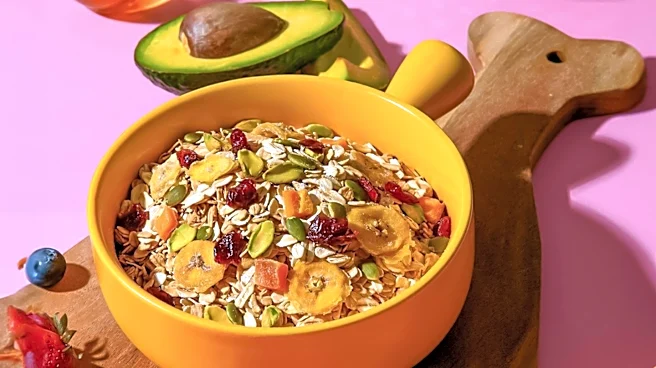
Backflip, a new cereal brand co-founded by entrepreneur Shaun Neff and YouTube personality Ben Azelart, is reimagining breakfast cereals for modern families by offering healthier, clean-label alternatives.
The brand's cereals feature organic ingredients, 40% less sugar than major brands, and 6 grams of protein per serving, without synthetic dyes, seed oils, or glyphosate. Backflip launched in July and has already sold nearly 500,000 units in Target stores within its first 60 days, reaching a total of one million units sold by October. Approximately 75% of Backflip's customers had not purchased cereal in the previous two years, indicating the brand is attracting lapsed consumers back to the category. The company also incorporates creator-driven entertainment through Azelart's YouTube audience and collectible trading cards to engage younger consumers.
Why It's Important?
Backflip's success signifies a significant shift in consumer preferences within the breakfast cereal market, highlighting a growing demand for healthier, transparently sourced food options for children. The brand's ability to attract a large percentage of consumers who had previously abandoned the cereal category indicates a substantial market opportunity for products that balance nutritional value with appeal to children. This trend could pressure established cereal manufacturers to reformulate their products to meet evolving consumer expectations for cleaner labels and lower sugar content. Furthermore, Backflip's innovative marketing strategy, leveraging creator-driven entertainment and collectibles, demonstrates a new approach to engaging modern families, which could influence marketing tactics across the food industry. The brand's rapid sales growth underscores the power of combining health-conscious product development with effective, contemporary consumer engagement strategies.
What's Next?
Backflip plans to build on its initial success by adding two permanent flavors and introducing limited-time offerings. The company's focus will be on converting early momentum into lasting consumer loyalty by consistently delivering on taste and nutrition. This strategy suggests continued innovation in product development and marketing. The strong performance of Backflip could encourage more entrepreneurs and influencers to enter the food industry with similar health-focused and digitally-native brands. Established food companies may also look to acquire or partner with such disruptive startups to adapt to changing market demands. The success of Backflip in bringing lapsed consumers back to the cereal category could lead to a revitalization of the broader breakfast food market, with a renewed emphasis on healthier and more engaging options.
Beyond the Headlines
Backflip's emergence reflects a broader cultural trend where parents are increasingly scrutinizing food labels and seeking healthier options for their children, driven by growing awareness of nutrition and wellness. The brand's success challenges the long-standing dominance of traditional cereal mascots and marketing tactics, suggesting a shift towards more authentic and value-driven consumer engagement. Ethically, Backflip's commitment to clean ingredients and reduced sugar content addresses public health concerns related to childhood obesity and diet-related diseases. Culturally, the integration of a YouTube personality and collectibles into the brand experience highlights the evolving landscape of children's entertainment and how it intersects with consumer products. This development could lead to a re-evaluation of how food brands connect with families, moving towards more transparent, health-conscious, and digitally integrated approaches.