


What's Happening?
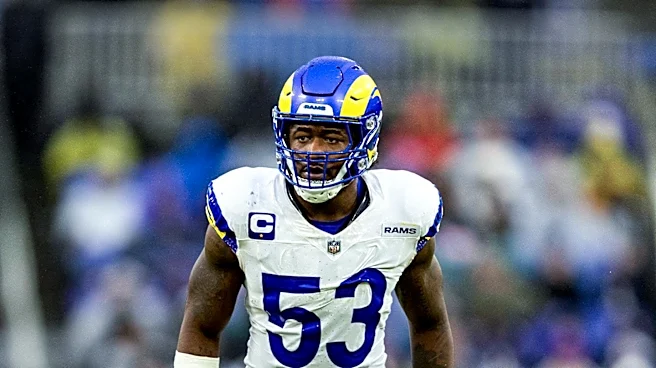
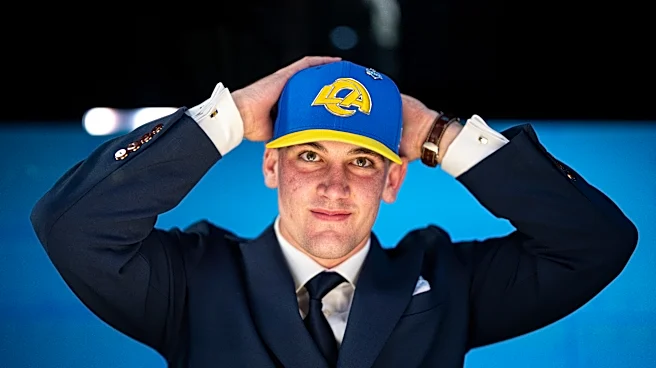
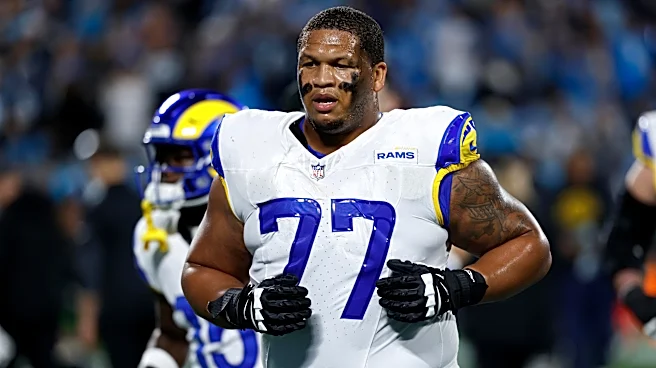
The Los Angeles Rams are positioned as a leading contender for Super Bowl 61, despite having the NFL's weakest collection of talent under 25 years old. This paradox is a result of the Rams' strategy of trading draft capital for proven NFL players, a tactic
that has kept them competitive under head coach Sean McVay. The Rams' roster-building approach has limited the influx of young talent, with only a few players under 25 starting games last season. The team relies heavily on experienced players like quarterback Matthew Stafford, who remains central to their championship aspirations.
Why It's Important?
The Rams' approach highlights a significant trend in the NFL where immediate success is prioritized over long-term development. By focusing on experienced players, the Rams aim to maintain their competitive edge in the short term, potentially at the cost of future stability. This strategy could influence other teams to adopt similar tactics, impacting the league's overall player development landscape. The Rams' success or failure with this approach could have broader implications for how teams balance the need for immediate results with the cultivation of young talent.
What's Next?
The Rams face the challenge of sustaining their success as their veteran players age. Injuries or declining performance could necessitate a shift towards younger players, such as quarterback Ty Simpson, who is seen as a potential successor to Stafford. The team's ability to manage this transition will be crucial in maintaining their status as Super Bowl contenders. Additionally, the Rams' strategy may prompt other teams to reevaluate their own roster-building approaches, potentially leading to shifts in how teams prioritize draft picks versus proven talent.