






What's Happening?
Hyundai Motor America has acquired the remaining stake in Boston Dynamics from SoftBank, completing its full ownership of the U.S. robotics firm. This acquisition, valued at approximately KRW 500 billion (US$335 million), follows Hyundai's initial 80%
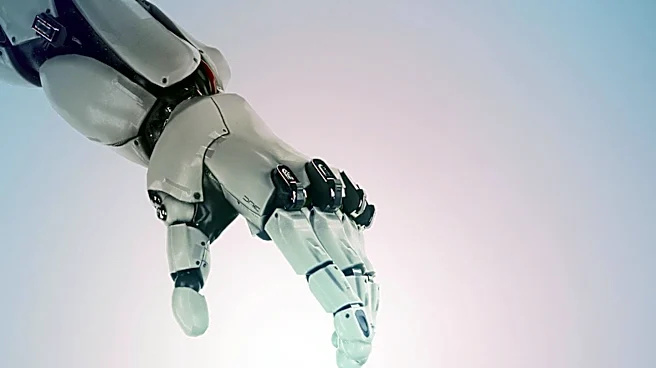
purchase in 2021. The move is part of Hyundai's strategy to integrate Boston Dynamics' robotics technology into its automotive manufacturing processes. The company plans to deploy Boston Dynamics' humanoid robot, Atlas, at its Georgia electric vehicle plant by 2028, initially for parts sequencing and heavy lifting. By 2030, Atlas's role is expected to expand to include welding and component assembly. Hyundai Mobis, the group's parts division, will manufacture custom actuators for Atlas, integrating the robotics expertise into Hyundai's supply chain.
Why It's Important?
The acquisition signifies Hyundai's commitment to leveraging advanced robotics to address challenges in automotive manufacturing, such as aging labor forces and the precision demands of electric vehicle assembly. By integrating Boston Dynamics' technology, Hyundai aims to enhance efficiency and reduce production costs. This move could set a precedent for other automakers to adopt similar technologies, potentially reshaping the industry's approach to manufacturing. The deployment of humanoid robots like Atlas could lead to significant changes in labor dynamics, with potential implications for workforce displacement and labor negotiations.
What's Next?
Hyundai plans to begin deploying Atlas robots at its Georgia plant in 2028, with a broader rollout across other facilities by 2030. The company aims to produce up to 30,000 Atlas units annually, with a significant portion used internally and the remainder sold to external customers. However, Hyundai may face resistance from labor unions concerned about job displacement. The success of this integration will depend on the robots' performance in live production environments and the company's ability to address labor concerns.
Beyond the Headlines
The integration of robotics into manufacturing raises ethical and social considerations, particularly regarding job displacement and the future of work. As companies like Hyundai and Tesla invest in robotics, there may be broader societal impacts, including shifts in labor markets and the need for new skills and training programs. Additionally, the use of advanced robotics could influence global manufacturing competitiveness, with implications for economic policy and international trade.