





What's Happening?
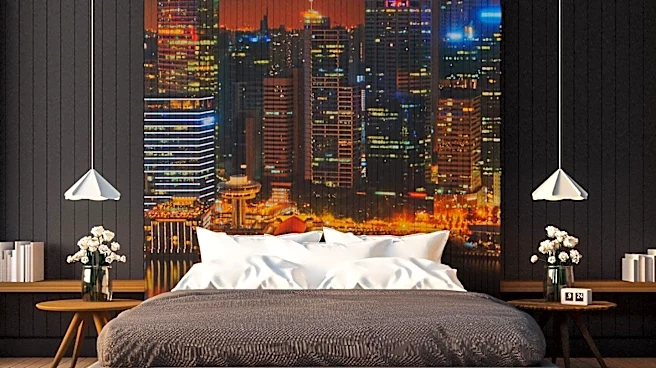
Wall murals are emerging as a significant trend in interior design, providing large-scale, continuous visual compositions that transform entire walls into focal points. Unlike traditional wallpaper with repeating patterns or individual wall decals, murals typically
feature one expansive scene or artistic design. These decorative elements are available in various styles and colors, allowing for customization to fit specific wall dimensions. Materials such as canvas or vinyl are commonly used, offering different aesthetic and installation experiences. Wall murals are designed to create a welcoming atmosphere and can range from eye-catching designs to softer patterns, depending on the desired mood for a room. They are particularly effective in creating immersive environments in spaces like nurseries, children's rooms, living rooms, and bedrooms, adding charm and sophistication.
Why It's Important?
The rise of wall murals signifies a shift in interior design towards more personalized and impactful decorative solutions. For consumers, this means greater flexibility in expressing individual style and creating unique atmospheres within their homes without extensive renovations. The ability to customize murals to exact wall dimensions and choose from various materials like canvas or vinyl enhances their appeal, making them a versatile option for both homeowners and renters seeking temporary yet dramatic transformations. This trend also impacts the home decor industry, driving innovation in design, printing technology, and adhesive solutions for large-format applications. Businesses in this sector are adapting to meet the demand for high-quality, customizable, and easy-to-install wall art, potentially expanding market opportunities for manufacturers and retailers of home furnishings and decorative products.
What's Next?
The market for wall murals is expected to continue growing as consumers increasingly seek unique and customizable home decor options. Manufacturers will likely focus on expanding design libraries, offering more diverse artistic styles, and improving material durability and ease of installation. Innovations in peel-and-stick technology will further simplify the application process, making murals more accessible to DIY enthusiasts. We may also see an increase in collaborations between artists and mural producers, leading to exclusive and limited-edition designs. Furthermore, the integration of augmented reality (AR) tools could allow customers to visualize murals in their homes before purchase, enhancing the shopping experience and driving adoption. The emphasis will remain on providing large-scale visual storytelling that integrates seamlessly into a room's overall design.
Beyond the Headlines
Beyond their aesthetic appeal, wall murals represent a broader cultural shift towards experiential living and personalized environments. In an era where digital content often dominates visual experiences, physical large-scale art in homes offers a tangible and immersive alternative. This trend can influence psychological well-being by creating calming, inspiring, or stimulating spaces tailored to individual preferences. Environmentally, the industry may face increasing pressure to adopt sustainable materials and production processes, given the large surface area these products cover. The ease of removal for peel-and-stick options also addresses the transient nature of modern living, allowing for frequent redecoration without permanent commitment, which could impact long-term design trends and consumer expectations for home decor products.