





What's Happening?
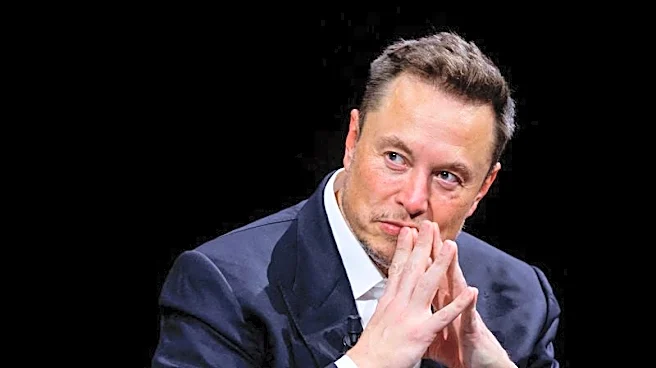
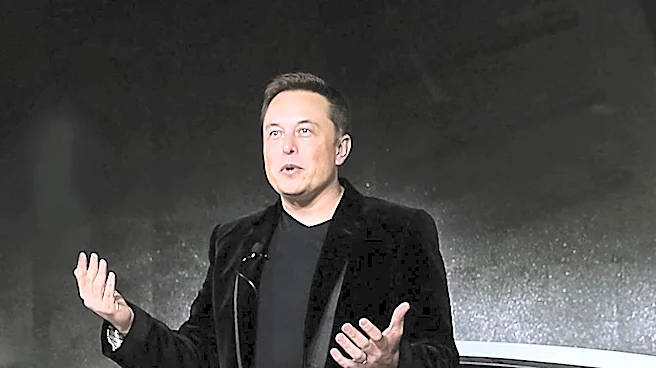
Tesla CEO Elon Musk has publicly stated his requirement for 25% voting control within the company to feel comfortable leading its ambitious expansion into artificial intelligence (AI) and robotics. This position was first articulated by Musk in 2024 via
posts on X, where he expressed discomfort with Tesla's trajectory as a leader in these advanced fields without a significant ownership stake. He clarified that a 25% threshold would provide him with substantial influence, allowing him to guide the company's direction while still enabling shareholders to override his decisions if a supermajority voted against him. Conversely, he warned that a stake of 15% or lower would make Tesla susceptible to a "takeover by dubious interests," potentially derailing his long-term vision. Recently, Musk has taken steps to increase his voting power, boosting his stake to nearly 20% from an earlier 13% by exercising stock options. Although the full vesting of these newly acquired shares is scheduled for January 2028, their legal structure has granted him immediate voting authority, reinforcing his direct control over Tesla's strategic pivot from an electric vehicle manufacturer to a broader technology company focused on AI and robotics.
Why It's Important?
Elon Musk's pursuit of a 25% voting stake in Tesla holds profound implications for the company's future and its shareholders. His stated rationale is to secure sufficient control to steer Tesla's direction without undue interference, particularly as it undergoes a massive and risky transition from an electric vehicle company to a leader in AI and robotics. This strategic shift encompasses the development of self-driving technology, the deployment of Robotaxis, and the production of the Optimus humanoid robot. The inherent risks of this pivot are considerable; for instance, Tesla has only manufactured hundreds of Optimus robots, which are not yet available for purchase, and its self-driving service remains in a limited test phase across a select number of cities. This ambitious reorientation, coupled with Musk's desire for concentrated control, presents a potential challenge for shareholders. Since Musk's initial comments on voting control in 2024, Tesla's stock performance has seen a 51% increase, which, while substantial, has lagged behind the S&P 500's 62% returns over the same period, highlighting investor uncertainty regarding the company's evolving identity and leadership structure.
What's Next?
As Elon Musk solidifies his voting control, the immediate future for Tesla will likely involve an intensified focus on the execution of its AI and robotics initiatives. With his increased influence, Musk is expected to accelerate development in areas such as self-driving capabilities, the expansion of the Robotaxi network, and the mass production of Optimus humanoid robots. These ambitious goals are directly tied to the targets outlined in Musk's nearly $1 trillion pay package, which includes selling 1 million robots and having 1 million Robotaxis operational. While his newly acquired shares provide immediate voting power, their full vesting in January 2028 indicates a sustained period during which his strategic vision will heavily shape the company. Furthermore, a recent report from the Wall Street Journal suggested that a potential merger between Tesla and SpaceX could be considered if half of Tesla's ambitious targets are achieved. This possibility introduces another layer of complexity and potential transformation for the company, and stakeholders will closely monitor both the progress on AI/robotics development and any discussions regarding corporate restructuring.
Beyond the Headlines
Elon Musk's demand for a 25% voting stake in Tesla transcends typical corporate governance discussions, touching upon fundamental questions of founder control versus shareholder rights in the modern tech landscape. His argument for needing this level of influence to protect Tesla from "dubious interests" and ensure its AI/robotics future highlights a tension between a visionary leader's long-term strategic gambles and the collective interests of a diverse shareholder base. This situation could establish a precedent for how other high-profile CEOs in rapidly evolving sectors seek to maintain decisive control over their companies' direction, especially when embarking on high-risk, transformative ventures. It also underscores the unique challenges faced by companies like Tesla, which operate at the intersection of multiple cutting-edge technologies. The outcome of Musk's quest for greater control will not only shape Tesla's destiny but also contribute to the ongoing debate about the optimal balance of power between founders, management, and investors in publicly traded innovation-driven enterprises.