






What's Happening?
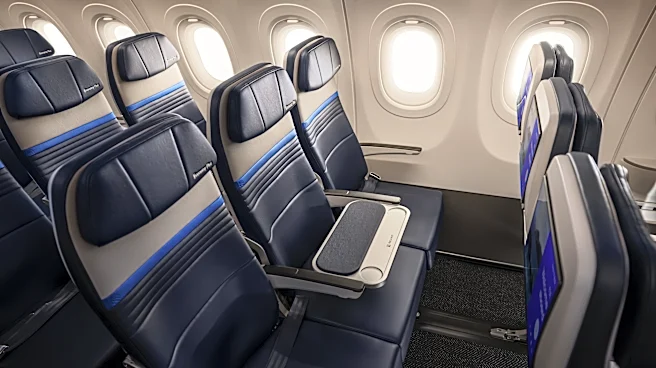
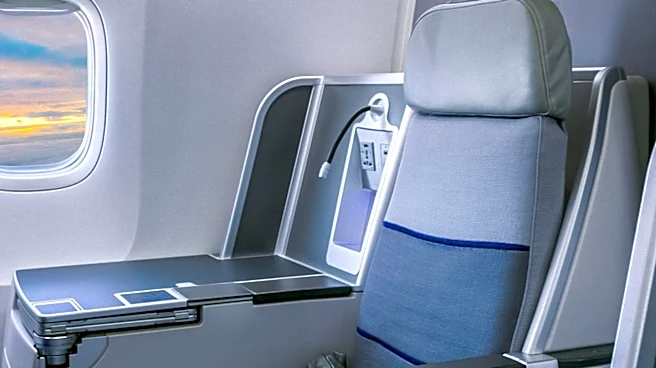
United Airlines has announced a new seating configuration for its Airbus A321XLR aircraft, which will feature an innovative Economy Plus option that eliminates the middle seat to provide passengers with additional elbow room. This new seating arrangement
includes a shared table across the open middle seat, offering more space for passengers seated in the window and aisle seats. The Economy Plus seats will also provide three extra inches of legroom. United plans to implement this seating option on all 50 of its A321XLR jets, with bookings available later this year. The airline is also considering expanding this seating style to other aircraft in its fleet. The A321XLR will replace the Boeing 757s in United's fleet and will be used for domestic flights starting this fall, with international routes expected by early 2027.
Why It's Important?
This development is significant as it reflects United Airlines' efforts to enhance passenger comfort and differentiate its services in a competitive airline industry. By offering more space and comfort in Economy Plus, United aims to attract more customers who value comfort on long-haul flights. This move could potentially influence other airlines to reconsider their seating configurations to remain competitive. Additionally, the introduction of the A321XLR, with its increased range and fuel efficiency, aligns with industry trends towards more sustainable and cost-effective operations. The changes could impact United's market share and profitability, as well as set new standards for passenger experience in the airline industry.
What's Next?
United Airlines plans to start using the A321XLR for domestic flights this fall, with international routes expected by early 2027. The airline will monitor customer feedback on the new seating configuration and may expand this option to other aircraft in its fleet. As the airline industry continues to evolve, United's competitors may respond by introducing similar seating options or other innovations to enhance passenger experience. The success of this initiative could lead to further investments in fleet upgrades and customer service enhancements across the industry.