

What's Happening?
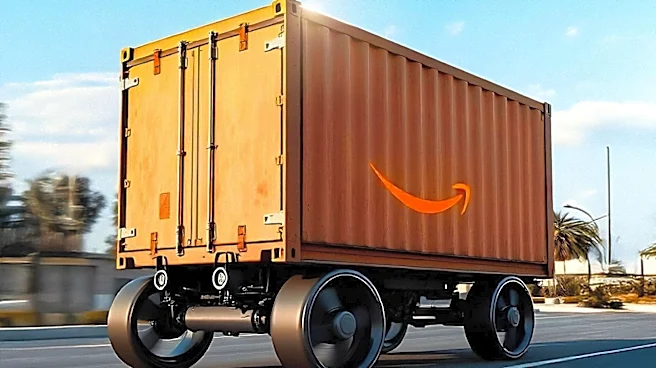
Amazon is reportedly preparing a significant expansion of its same-day delivery network, aiming to increase its dedicated facilities from approximately 85 today to over 1,000 by 2031. This initiative, internally known as Project Mercury, seeks to position
same-day facilities within a 10-mile radius of 80% of U.S. Prime subscribers. The goal is to fundamentally redesign Amazon's fulfillment infrastructure, bringing inventory closer to households and reducing the time and distance required for last-mile deliveries. Currently, many of Amazon's same-day sites are located about a 90-minute drive from customers. The company's three-year operating plan allocates $6.8 billion towards U.S. same-day capacity during 2026 and 2027. Internal analysis suggests Project Mercury could generate $7.1 billion in economic value over a decade and become cash-flow positive by 2030, though an Amazon spokesperson noted these forecasts are preliminary and subject to revision.
Why It's Important?
This expansion is crucial for Amazon's competitive positioning in the U.S. e-commerce market. By significantly enhancing its same-day delivery capabilities, Amazon aims to strengthen its speed advantage against major competitors such as Walmart, DoorDash, and Instacart. This move could deepen customer loyalty among Prime subscribers by offering faster delivery options, which is a key differentiator in the increasingly competitive online retail space. The substantial capital investment of $6.8 billion underscores Amazon's commitment to this strategy, indicating a belief that faster delivery will translate into sustained market leadership and increased customer engagement. The success of Project Mercury could set a new standard for delivery speed in the industry, potentially forcing competitors to accelerate their own logistics improvements to keep pace. However, the high capital expenditure also raises questions about the return on investment and the potential for overbuilding capacity if order density does not justify the investment.
What's Next?
Amazon will proceed with the phased implementation of Project Mercury, focusing on establishing new dedicated same-day facilities across the U.S. The company will likely monitor key metrics such as fulfillment costs per unit, delivery speeds, and Prime engagement to assess the effectiveness of the expansion. Investors will be closely watching whether this denser same-day infrastructure leads to improved retail margins and strengthens Amazon's overall competitive moat. The preliminary nature of the economic projections suggests that Amazon will continue to refine its strategy and investment based on initial results and market conditions. The company's ability to reach cash-flow positive status by 2030, as projected, will be a critical indicator of the project's long-term viability and success. Potential reactions from competitors could include increased investment in their own rapid delivery services or strategic partnerships to counter Amazon's enhanced capabilities.
Beyond the Headlines
The aggressive expansion of Amazon's same-day delivery network has broader implications for urban planning, labor markets, and consumer expectations. The proliferation of fulfillment centers within a 10-mile radius of 80% of U.S. Prime subscribers could lead to increased traffic congestion in residential areas and a greater demand for last-mile delivery personnel. This could also impact local businesses, as the convenience of same-day delivery from a giant like Amazon might further shift consumer spending away from traditional brick-and-mortar stores. Furthermore, the project highlights the ongoing arms race in e-commerce logistics, where speed and convenience are paramount. This continuous push for faster delivery could redefine consumer expectations, making next-day or even two-day delivery seem slow, thereby pressuring all retailers to adapt to an ever-accelerating delivery landscape. The environmental impact of a significantly expanded delivery fleet, even with potential route optimization, will also be a long-term consideration.