



What's Happening?
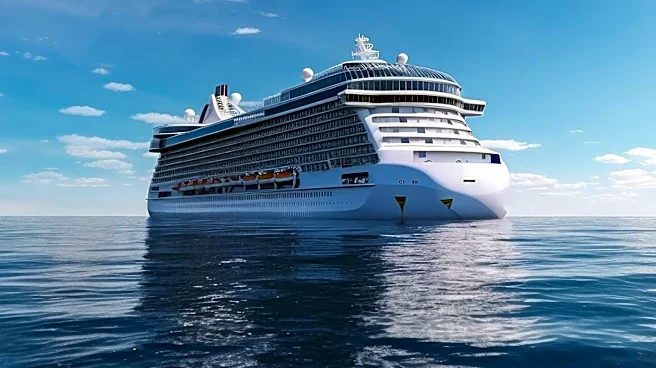
The residential cruise ship, The World, has successfully operated for nearly 25 years, distinguishing itself in an industry where many similar ventures have failed. Jessica Hoppe, CEO of The World, attributes this success to several factors, including
resident ownership, financial transparency, and a long-term operating plan. Unlike other residential cruise lines that have struggled, such as Villa Vie's Odyssey, which suspended operations in October, and Victoria Cruises Line's Majestic, which faces repeated delays, The World's model involves residents owning its 165 apartments and the vessel itself. This not-for-profit structure means residents' payments directly fund the ship's operations, rather than going to outside investors. Residences on The World are high-priced, starting at approximately $3.5 million for a studio, with annual operating costs up to 10% of the purchase price. The ship was purpose-built for residential life, unlike some competitors that attempted to retrofit older passenger ships.
Why It's Important?
The longevity of The World provides a unique case study in the challenging residential cruising industry. Its success demonstrates that a viable model exists, albeit one that requires significant financial commitment from its residents and a high degree of transparency and resident involvement in governance. The failures of other ventures, such as Villa Vie's Odyssey, highlight the inherent difficulties, including high operational costs, fuel price volatility, and the complexities of retrofitting ships. The World's approach of resident ownership and direct funding for operations mitigates some of the financial risks associated with investor-driven models. This distinction is crucial for understanding the sustainability of such luxury ventures. The emphasis on long-term planning, including three-year itinerary setting and fuel hedging, further contributes to its stability, contrasting sharply with the frequent itinerary changes and financial distress seen in less successful operations. The model suggests that for residential cruising to thrive, it may need to cater to an exceptionally affluent demographic willing to invest heavily and participate in the ship's management.
What's Next?
For the residential cruising industry, The World's continued success may serve as a blueprint for future ventures, particularly regarding financial structure and resident engagement. Prospective residents considering other residential cruise opportunities are advised by Hoppe to scrutinize funding models, commitments to lenders and shipyards, and long-term operational plans. The industry will likely continue to see attempts to replicate The World's success, potentially leading to more niche, high-end offerings that prioritize resident ownership and transparency. However, the high barrier to entry, both in terms of initial investment for building or retrofitting ships and the cost of residences, means that residential cruising will likely remain a luxury market. The challenges faced by other companies underscore the need for robust financial planning and a clear operational strategy from inception, rather than focusing solely on launching a vessel. The market will continue to evolve as companies learn from both the successes and failures within this unique segment of the cruise industry.
Beyond the Headlines
The contrasting fates of residential cruise ships like The World and the Odyssey reflect broader economic and social trends. The World caters to an ultra-wealthy demographic, creating a self-sustaining community that effectively owns and manages its floating luxury residences. This model bypasses many of the financial pressures and investor demands that plague traditional cruise lines or less affluent residential ventures. The concept of 'living at sea' for extended periods, while appealing, is shown to be economically feasible only under very specific conditions, primarily extreme wealth and a collective ownership structure. This highlights a growing trend in luxury markets where consumers seek not just services but ownership and control over their high-end experiences. The failures of other residential cruise lines also point to the speculative nature of some ventures, where the dream of a perpetual voyage clashes with the harsh realities of maritime economics and operational complexities. The World's success is less about a scalable business model for the masses and more about the creation of an exclusive, self-governing, and financially robust community for the global elite.