





What's Happening?
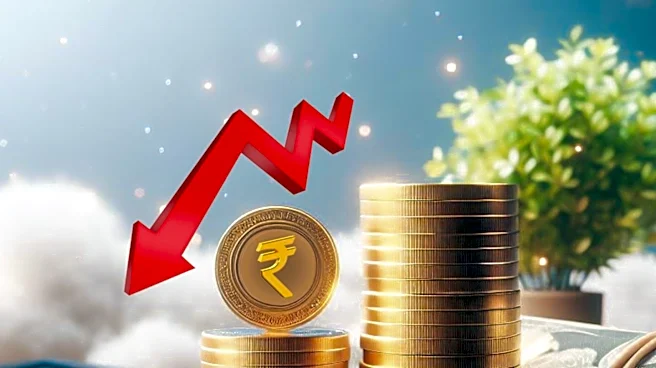
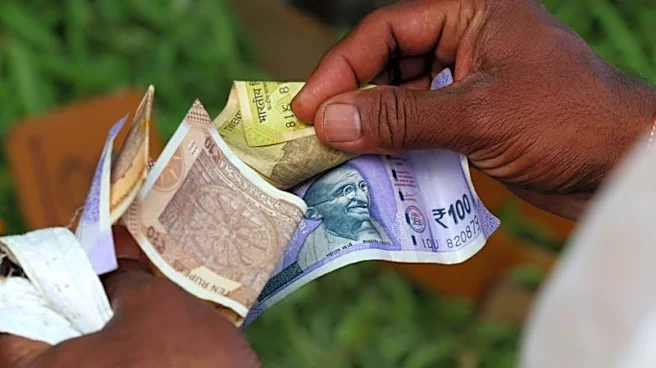
The Indian Rupee (INR) has extended its winning streak against the US Dollar (USD) for the sixth consecutive trading day, with the USD/INR pair falling to a two-month low of 94.32. This advance is primarily driven by significant selling pressure on the US Dollar and
a notable decline in oil prices, both influenced by the outcome of the US midterm elections where Republicans faced setbacks. The US Dollar Index (DXY), which measures the Greenback against a basket of six major currencies, is down 0.25% to approximately 101.25, nearing its monthly low of 101.10. The MCX Crude Oil contract for November 19 has also dropped by 1.7% to around Rs. 8,222, marking an almost 17.50% decrease from its recent highs. This reduction in oil prices is particularly beneficial for economies like India, which are heavily dependent on oil imports.
Why It's Important?
The weakening of the US Dollar and the fall in oil prices have significant economic implications for India. Lower oil prices reduce India's import bill, which can help improve its trade balance and alleviate inflationary pressures within the country. This provides a boost to the Indian Rupee, making imports cheaper and potentially stabilizing domestic prices. For the US, the intense selling pressure on the dollar stems from expectations that a Democrat-controlled Congress and White House will lead to political gridlock, potentially resulting in a prolonged government shutdown and issues with the debt ceiling. This political friction is seen as a headwind for the dollar, making it less attractive to investors. Furthermore, concerns about tougher regulation on Artificial Intelligence (AI) stocks, as noted by ING, could also impact the dollar's value, highlighting the interconnectedness of political developments, economic policy, and market sentiment.
What's Next?
Analysts at ING suggest that the US political backdrop could continue to exert downward pressure on the dollar into 2027, especially if an emboldened Democratic Party challenges Republican policies, including deregulation and AI development. The potential for a prolonged government shutdown in mid-2027 further reinforces the case for a weaker dollar. For India, the continued decline in oil prices and the strengthening Rupee could lead to more favorable economic conditions, potentially influencing the Reserve Bank of India's monetary policy decisions. However, the global oil market remains sensitive to geopolitical developments, and any escalation in conflicts could reverse the current trend of lower prices. The technical analysis of USD/INR indicates a bearish near-term tone, with key support levels to watch, suggesting that the Rupee's advance may continue unless there are significant shifts in market dynamics or US political stability.
Beyond the Headlines
The midterm election results have not only impacted currency markets but also eased fears of further escalation in the conflict between the US and Iran, contributing to the decline in oil prices. This demonstrates how political outcomes can directly influence geopolitical tensions and, consequently, global commodity markets. The recovery of crude shipments through the Strait of Hormuz to near pre-war levels, albeit at a higher cost, signifies a return to a more stable supply chain, pushing the global oil market back into surplus. This broader geopolitical context, combined with domestic political gridlock in the US, creates a complex environment for currency traders and policymakers. The long-term implications of a potentially weaker dollar and sustained political friction in the US could reshape international trade dynamics and investment flows, with emerging economies like India potentially benefiting from a more favorable currency and commodity price environment.