


What's Happening?
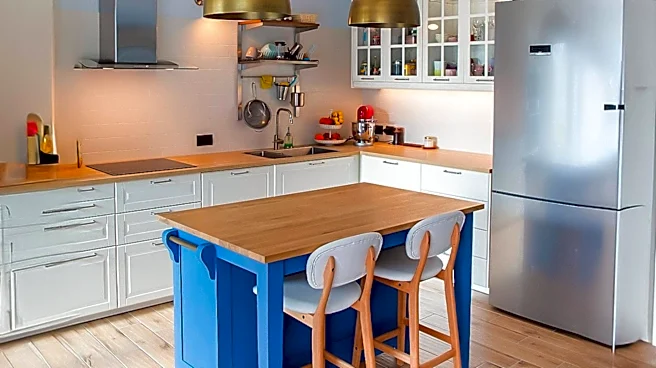
Interior designer Jacklynn Little recently undertook a renovation of her own condo kitchen, which had not been updated in 16 years. The original kitchen was described as "dated and drab" with an "overwhelming amount of brown tones." Little's redesign
focused on transforming the space while maintaining its existing footprint. A key element of the renovation was painting the cabinets with Benjamin Moore's "Pale Smoke," a color she refers to as a "beautiful blue." She opted for professional painters to apply the coat with a sprayer, highlighting that painting existing cabinetry can be a cost-effective alternative to replacement, often costing about a quarter of the price. The project also involved replacing cabinet hardware, removing an old cabinet above the fridge to install a large basket for added texture, and selecting new countertops and a marble backsplash that coordinated with the existing creamy yellow floor. New pendant lighting and a new sink were also installed, contributing to a significantly more modern and chic aesthetic.
Why It's Important?
This kitchen renovation exemplifies a growing trend in home improvement where strategic updates, rather than complete overhauls, can yield significant aesthetic and functional improvements. The decision to paint existing cabinets instead of replacing them highlights a practical and budget-conscious approach that can save homeowners substantial amounts of money, making modern design accessible to a wider demographic. This approach is particularly relevant in the U.S. housing market, where renovation costs can be a major barrier. Furthermore, the designer's focus on coordinating new elements with existing features, such as the floor, demonstrates how thoughtful design can integrate old and new, extending the lifespan of existing home components and promoting sustainability in home design. The project's total cost of approximately $18,000 showcases that impactful transformations don't always require exorbitant spending, offering a model for homeowners looking to refresh their living spaces efficiently.
What's Next?
The success of this renovation may inspire other homeowners and designers to explore similar cost-effective and sustainable approaches to kitchen and home remodeling. The emphasis on painting existing cabinetry as a "game-changer" could lead to increased demand for professional cabinet painting services and a greater variety of paint colors specifically marketed for kitchen applications. We might also see a continued focus on integrating new design elements with existing structural components to maximize budget efficiency and minimize waste. As homeowners seek to update their spaces without the expense and disruption of full-scale demolition, the market for targeted, impactful renovations is likely to expand, with a focus on smart material choices and professional execution for key elements like cabinetry and countertops.
Beyond the Headlines
Beyond the immediate aesthetic appeal, this renovation reflects a broader shift in consumer values towards practicality, sustainability, and personalized design. The choice to paint rather than replace cabinets speaks to a desire for both economic prudence and environmental consciousness, as it reduces waste and extends the life of existing materials. This approach challenges the traditional notion that significant home improvement always requires brand-new installations. The integration of a large basket for texture, for instance, demonstrates how functional elements can also serve as design features, adding character and warmth to a modern space. This project underscores the idea that a home's character can be enhanced through thoughtful, strategic interventions that honor its existing structure while infusing it with contemporary style and personal taste, moving away from a purely disposable mindset in home decor.