



What's Happening?
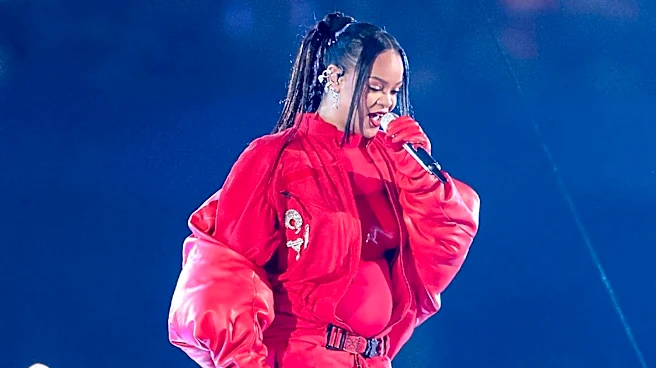
The Super Bowl Halftime Show has evolved significantly over the years, becoming a major cultural event. Initially featuring marching bands, the show has transformed into a platform for high-profile performances by global artists. Recent shows have included
diverse acts like Bad Bunny, who delivered a Spanish-language performance with guest appearances by Lady Gaga and Cardi B. The show attracted 124.9 million viewers, making it one of the most-watched in history. Despite its popularity, the show has faced criticism, including from the President of the United States, who expressed disapproval of its content.
Why It's Important?
The Super Bowl Halftime Show is a reflection of cultural trends and societal values. Its evolution from simple performances to elaborate productions highlights the increasing importance of entertainment in sports events. The show's ability to attract massive audiences underscores its role as a significant marketing platform, influencing advertising strategies and brand visibility. The criticism it faces also points to ongoing cultural debates about representation and content appropriateness, impacting how future shows might be curated to balance artistic expression with public expectations.
What's Next?
As the Super Bowl Halftime Show continues to evolve, future performances are likely to feature even more diverse and innovative acts. Organizers may seek to address criticisms by ensuring content aligns with broader audience values while maintaining artistic integrity. The show's role as a marketing powerhouse will likely grow, with brands seeking creative ways to engage with the vast viewership. The NFL may also consider feedback from various stakeholders to enhance the show's appeal and relevance.