





What's Happening?
Businesses are being advised to recognize the distinct differences between network data wiring and electrical wiring to avoid common issues like slow network speeds, dropped calls, and costly repairs. While both types of wiring run through walls and ceilings,
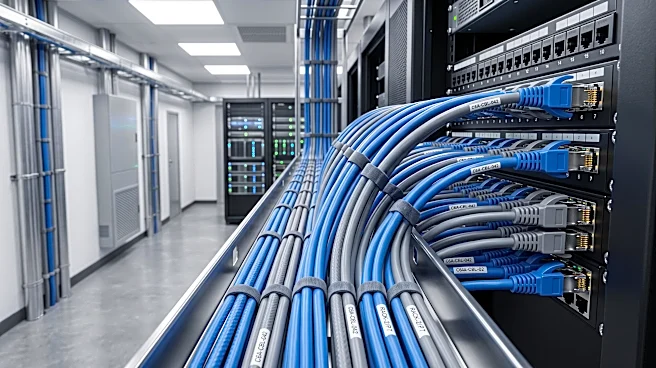
their functions, cable types, voltage, installation methods, and testing standards are fundamentally different. Data cabling carries low-voltage data and voice signals using cables like Cat6, Cat6a, and fiber, connecting devices such as computers, VoIP phones, and security cameras to the internet. Electrical wiring, conversely, carries line voltage (120V/240V) to deliver power. A critical distinction is that electrical wiring generates electromagnetic fields, which can interfere with data signals if data cables run too closely alongside power lines. Industry standards mandate keeping data and power lines separate and crossing them at right angles when necessary to prevent signal disruption. Professional data cabling installers use certification testers to ensure each cable run meets its rated speed and signal quality, a crucial step often overlooked by general electricians.
Why It's Important?
The proper installation of network data wiring is foundational for a business's operational efficiency and communication reliability. Poorly installed or inadequate data cabling can lead to significant productivity losses due to slow internet speeds, unreliable phone systems, and malfunctioning security cameras. In today's digital economy, where businesses heavily rely on fast and stable network connections for daily operations, customer service, and data exchange, compromised cabling can directly impact profitability and competitiveness. The common misconception that any electrician can handle data cabling can result in networks that are technically functional but perform far below optimal levels, leading to frustration and hidden costs from troubleshooting and eventual re-installation. Investing in specialized data cabling installation ensures that a business's network infrastructure can support current technological demands and future growth, providing a robust backbone for all digital communications and operations.
What's Next?
Businesses planning office moves, expansions, or renovations are encouraged to engage specialized low-voltage or cabling technicians for their network infrastructure. This proactive approach allows for proper planning, design, and installation of data cabling, ensuring optimal performance from the outset. Key steps include a site survey to plan cable routes and identify potential issues, selecting appropriate cable types (Cat6, Cat6a, or fiber) based on current and future needs, and ensuring a clean, standards-based installation that keeps data lines separate from power lines. Regular assessments of existing cabling are also recommended, especially if a business experiences unexplained slowdowns, choppy calls, or is upgrading to new technologies like advanced Wi-Fi access points or VoIP systems. Professional installations typically include thorough testing, certification, labeling, and documentation, which are vital for efficient troubleshooting and future network modifications. Upgrading older Cat5 or Cat5e cabling may also be necessary to support modern business demands.
Beyond the Headlines
The distinction between data and electrical wiring highlights a broader trend in modern infrastructure: increasing specialization and the need for integrated systems thinking. As businesses become more reliant on complex technological ecosystems, the foundational elements like cabling become critical determinants of overall system performance. This issue also touches upon the importance of industry standards and professional expertise in areas that might seem mundane but have profound operational impacts. The electromagnetic interference between power and data lines is a classic example of how physical proximity can create unseen digital vulnerabilities, underscoring the need for meticulous planning and adherence to best practices. Furthermore, the discussion implicitly points to the evolving role of IT infrastructure as a strategic asset rather than just a utility, where the quality of its physical layer directly influences a company's agility, security, and capacity for innovation. Businesses that neglect this foundational aspect risk creating a bottleneck that undermines investments in cutting-edge software and hardware.