



What's Happening?
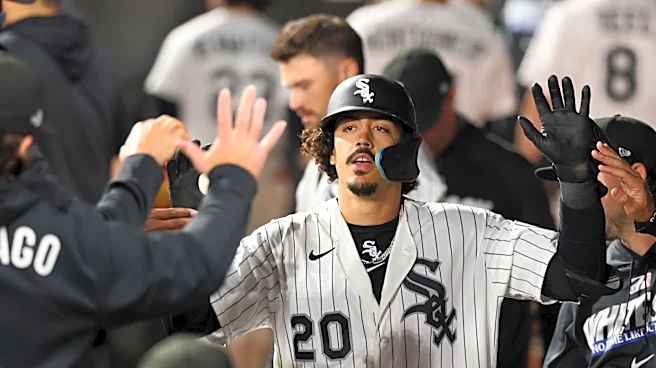
The Texas Rangers are facing a decision regarding whether to tender a contract to first baseman Jake Burger before the arbitration deadline. Burger, who slashed .228/.302/.421 with 28 home runs and 90 RBI in 2026, is projected to earn $6.9 million in arbitration.
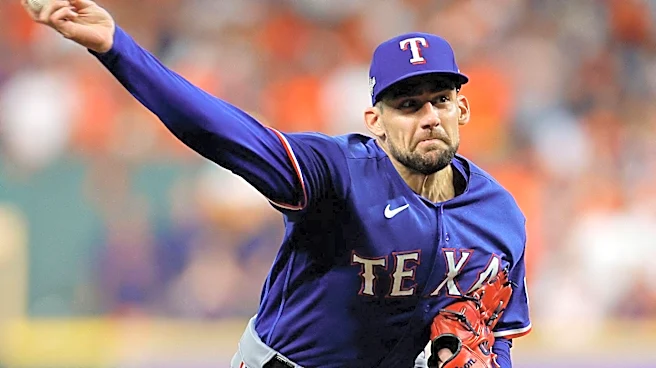
The Rangers are operating under a flat payroll for 2027, estimated at $190 million, and have significant financial commitments to players like Jacob deGrom, Nathan Eovaldi, and Corey Seager. President of baseball operations Chris Young has indicated a shift in team philosophy towards valuing on-base percentage and versatility over pure slugging. Burger's high strikeout rate (167 in 2026) and lower on-base percentage compared to his career high make him a potential candidate for non-tender, which would release him to free agency and save the team money.
Why It's Important?
This decision reflects a critical juncture for the Texas Rangers as they navigate financial constraints and a strategic shift in team building. Non-tendering Jake Burger would free up approximately $7 million, which could be crucial for acquiring players who better fit the new emphasis on on-base skills and versatility. This move could also open a roster spot for younger, cheaper players like Justin Foscue, who aligns with the team's evolving philosophy. The situation highlights the difficult choices MLB teams face in balancing player performance, financial realities, and long-term strategic vision. For Burger, a non-tender would mean entering free agency, seeking a new team that values his power profile. For the Rangers, it signifies a commitment to a specific type of player and a willingness to make tough personnel decisions to achieve their goals.
What's Next?
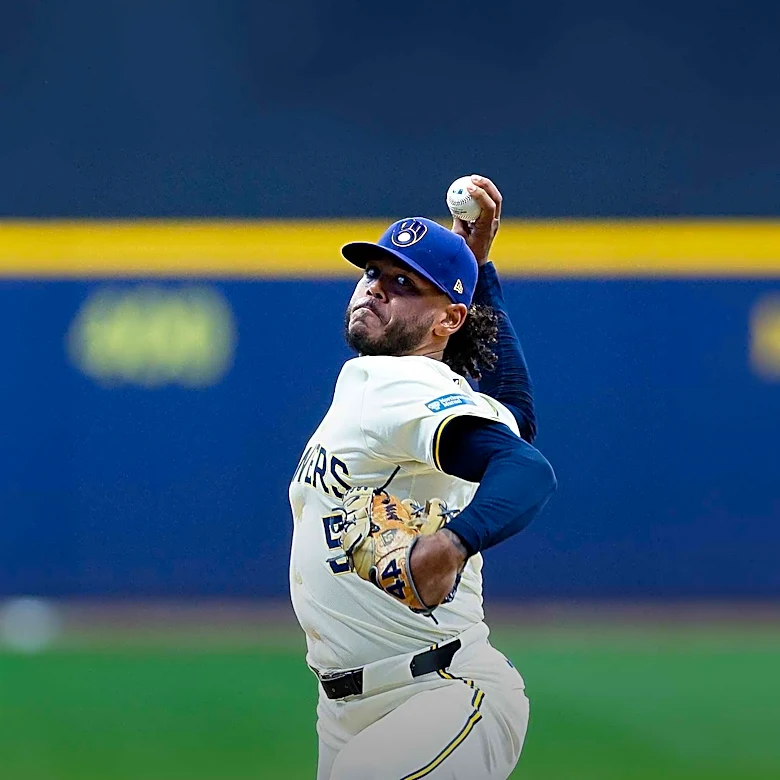
The Rangers must decide on tendering contracts to arbitration-eligible players by November 20. While a non-tender for Jake Burger is a possibility, a trade is also being considered as a way to move him while potentially acquiring assets. The most likely outcome, however, is that Burger will be kept for the 2027 season, as he remains one of the team's few power sources. The team will continue to evaluate its roster and financial situation, potentially exploring other avenues to create payroll flexibility or acquire players who fit their evolving strategy. Decisions regarding other arbitration-eligible players, such as MacKenzie Gore, Josh Jung, and Evan Carter, will also be made, with the team needing Gore for its rotation despite his injury.
Beyond the Headlines
The Rangers' situation with Jake Burger illustrates the broader trend in baseball analytics, where traditional power numbers are increasingly weighed against on-base percentage and overall offensive versatility. Teams are moving towards more dynamic lineups that can generate runs in multiple ways, rather than relying solely on home runs. This philosophical shift can lead to difficult decisions regarding players who were once considered valuable assets but no longer fit the evolving mold. Furthermore, the financial pressures on teams, even those with significant revenue, necessitate careful management of payroll, often leading to tough choices about retaining or releasing players. The outcome of this decision will not only impact Burger's career but also signal the Rangers' firm commitment to their new strategic direction and how they plan to compete in the coming seasons.