





What's Happening?
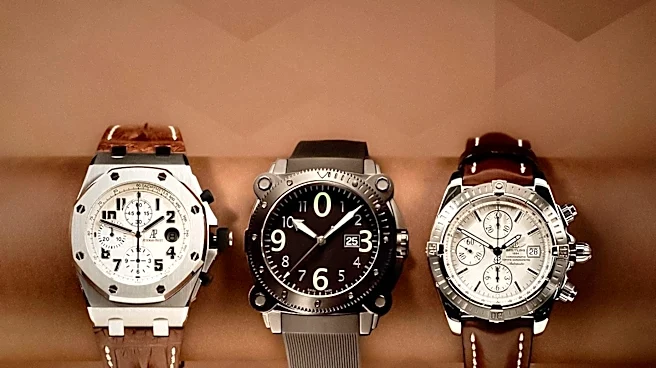
Breitling has introduced a digital passport system for its watches, allowing owners to register their timepieces on Breitling.com. This system provides access to various digital documents, including a digital certificate of ownership, the COSC certificate,
the user manual, and warranty status. For new watches, this is facilitated by scanning a QR code found on the warranty card. The digital passport also details product information and a complete ownership history. Breitling emphasizes the benefits of this system as transparency, traceability, and tradability, with ownership transfers occurring through a blockchain-based transaction. The company has partnered with Arianee for its blockchain technology. This initiative extends to all Breitling watches, including those produced since 2013, though authentication for older models still requires sending the watch to a Breitling Main Center.
Why It's Important?
Breitling's adoption of digital passports represents a significant step in the luxury watch industry towards leveraging blockchain technology for product authentication and ownership management. This move enhances consumer confidence by providing a verifiable digital record of a watch's provenance and authenticity, which is crucial in a market susceptible to counterfeiting. The 'tradability' aspect, enabled by blockchain, simplifies the transfer of ownership, potentially streamlining the secondary market for Breitling watches and increasing their liquidity. For consumers, it offers a convenient and secure way to manage their watch's documentation and history. For Breitling, it strengthens brand integrity and provides a direct digital channel for customer engagement and service. This trend could influence other luxury brands to adopt similar digital solutions, setting a new standard for product lifecycle management and customer experience in high-value goods.
What's Next?
The implementation of Breitling's digital passport system is likely to evolve with further integration of blockchain capabilities and digital services. Future developments could include enhanced security features, more seamless authentication processes that reduce the need for physical inspections, and potentially new functionalities that leverage the digital ownership record for personalized services or exclusive content. The success of this system could also encourage broader adoption of digital passports across the luxury sector, leading to industry-wide standards for digital authentication and ownership transfer. As more brands embrace similar technologies, consumers may come to expect digital passports as a standard feature for high-value purchases. Breitling will likely continue to refine its partnership with Arianee and explore how blockchain can further enhance transparency and trust in the ownership and resale of its products.
Beyond the Headlines
Breitling's digital passport initiative highlights a broader shift in how industries are approaching product identity and ownership in the digital age. Beyond mere authentication, these digital passports create a persistent, immutable record that can track a product's journey from manufacturing to multiple owners. This has profound implications for sustainability, enabling better tracking of product components and facilitating circular economy models. Ethically, it enhances transparency and combats illicit trade by making it harder to sell counterfeit goods or products with dubious origins. Culturally, it redefines the concept of ownership, adding a digital layer to physical possession, which could influence how consumers perceive and interact with their valuable assets. This move also underscores the growing importance of digital literacy for consumers, as managing such assets will increasingly require engagement with digital platforms and blockchain technology.