







What's Happening?
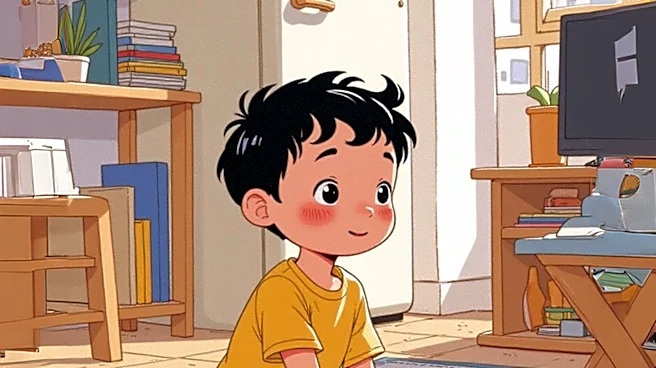
Mamoru Hosoda's novel 'Mirai' delves into the emotional landscape of a four-year-old boy named Kun, whose life is upended by the arrival of his baby sister, Mirai. The narrative explores Kun's jealousy and feelings of displacement as his parents' attention
shifts to the newborn. Instead of portraying Kun as merely a difficult child, Hosoda aims to uncover the underlying anxieties of a child fearing the loss of parental affection. The story takes a fantastical turn when Kun discovers a magical garden, allowing him to travel through time and interact with his family members at different stages of their lives. He encounters a teenage Mirai from the future, sees his mother as a child, and meets his young grandfather, gaining insights into their past struggles and experiences. This journey helps Kun understand his family better and accept his new role as an older brother.
Why It's Important?
The novel 'Mirai' offers a profound exploration of family relationships and the complex emotions associated with sibling rivalry and parental attention. It highlights the often-overlooked perspective of a child grappling with significant life changes, providing a relatable narrative for many firstborn children. By integrating elements of time travel and fantasy, Hosoda elevates a common family dynamic into a magical journey of self-discovery and empathy. The story underscores the idea that understanding and communication are crucial in navigating family challenges, suggesting that jealousy is not merely naughtiness but a feeling requiring comprehension. Furthermore, it subtly addresses the evolving roles within a family, including the father's involvement in domestic duties, promoting a more balanced view of parental responsibilities.
What's Next?
The novel 'Mirai' continues to resonate with readers, offering timeless insights into family bonds and personal growth. While the source mentions a film adaptation, its continued literary presence ensures that its themes of understanding, empathy, and the complexities of family life remain accessible. The book's exploration of childhood emotions and the journey of accepting new family members provides valuable lessons for both children and adults. Its enduring popularity suggests that future discussions and analyses of Hosoda's work will likely continue to focus on these universal themes, potentially inspiring further adaptations or scholarly interpretations of its narrative and psychological depth.
Beyond the Headlines
Beyond its immediate narrative, 'Mirai' delves into deeper psychological and sociological implications regarding family structures and individual development. The novel subtly critiques the idealized image of parenthood by showing that parents, too, are learning and imperfect. Kun's encounters with his family's past reveal that everyone has a history of mistakes and challenges, fostering a sense of shared humanity and understanding across generations. This perspective encourages readers to view family as a dynamic space for continuous learning and adaptation, rather than a static entity. The story also touches upon the idea that experiences, rather than just advice, are crucial for a child's development, emphasizing the importance of lived moments in shaping one's identity and relationships.