



What's Happening?
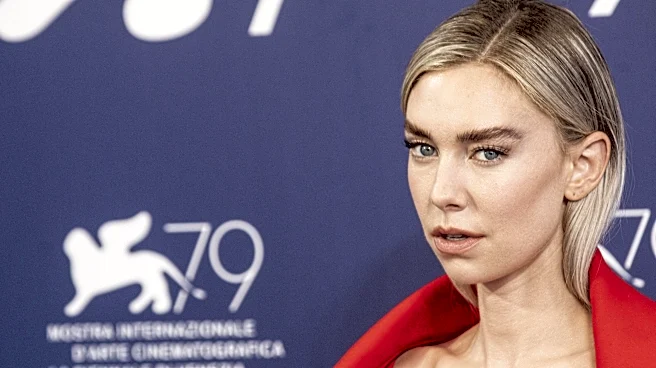
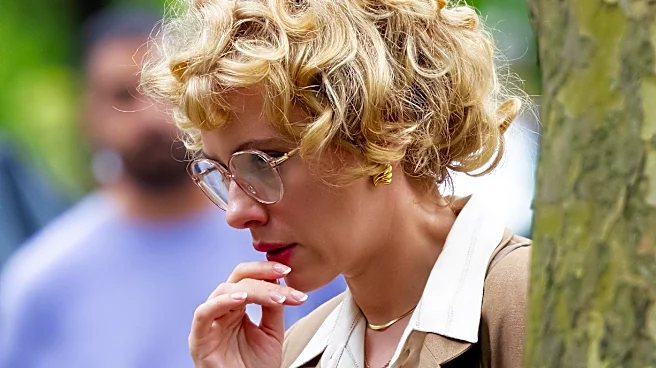
Filmmaker James Gray has provided an update on his adaptation of Ernest Hemingway’s novel, 'The Sun Also Rises,' confirming that Vanessa Kirby is attached to star. Gray expressed his desire to make the film but highlighted significant production hurdles,
primarily the financial and logistical complexities of recreating the running of the bulls in Pamplona. The novel, published in 1926, follows American journalist Jake Barnes and Lady Brett Ashley in post-World War I Paris and Pamplona, Spain, amidst a circle of disillusioned expatriates. Gray noted that authentically staging the Pamplona event, which involves hundreds of thousands of people, would necessitate filming during the actual festival. This requirement, combined with the period setting, would escalate the film's budget to an estimated $180 million, making it a challenging project to finance. Despite these obstacles, Gray has not abandoned the adaptation, though he acknowledges the substantial roadblocks.
Why It's Important?
The challenges faced by James Gray in adapting 'The Sun Also Rises' underscore broader issues within the film industry, particularly concerning the financing of ambitious, large-scale literary period dramas. A budget of $180 million for such a project, even with a respected filmmaker like Gray and an acclaimed actress like Vanessa Kirby, highlights the increasing difficulty in securing funding for films that are not guaranteed blockbusters or part of established franchises. This situation could impact the types of stories that get told in Hollywood, potentially leading to fewer adaptations of classic literature that require extensive historical recreation or complex logistical planning. It also reflects a trend where financial viability often dictates creative choices, potentially limiting artistic scope in favor of more commercially predictable ventures. The project's status could influence future decisions by studios and independent financiers regarding similar high-budget, non-franchise films.
What's Next?
While James Gray remains interested in directing 'The Sun Also Rises,' the film's future hinges on overcoming its substantial production and financial obstacles. Gray has not indicated a timeline for production, and given the estimated $180 million budget, securing the necessary funding will be a critical next step. This may involve seeking support from major studios, international co-production partners, or streaming platforms willing to invest in prestige projects. The involvement of Vanessa Kirby could help attract investors, but the core logistical challenge of filming the Pamplona sequence remains. If financing can be secured, the pre-production phase would involve extensive planning for location shooting during the actual running of the bulls, which occurs annually in July. Without a clear path to funding, the project may remain in development limbo indefinitely, or Gray might pivot to other, less logistically demanding films.
Beyond the Headlines
The predicament of 'The Sun Also Rises' adaptation extends beyond mere production costs, touching upon the evolving landscape of cinematic storytelling and historical authenticity. Gray's commitment to authentically portraying the Pamplona event, rather than resorting to CGI or scaled-down recreations, speaks to a desire for realism that is increasingly difficult to achieve within modern film budgets. This raises questions about the value placed on historical accuracy and immersive experiences versus cost-efficiency in contemporary filmmaking. The struggle to finance such a project could also signal a shift in audience appetite, where complex literary adaptations might be perceived as less commercially viable than genre films. Furthermore, the challenges highlight the unique difficulties of adapting works by iconic authors like Ernest Hemingway, where audience expectations for fidelity to the source material and its historical context are often very high, adding another layer of pressure to filmmakers and financiers.