








What's Happening?
A new cooking method for pork belly is gaining popularity, suggesting the addition of galangal to create a more flavorful and less greasy dish. Traditionally, pork belly is often braised, which can become monotonous. This innovative approach involves
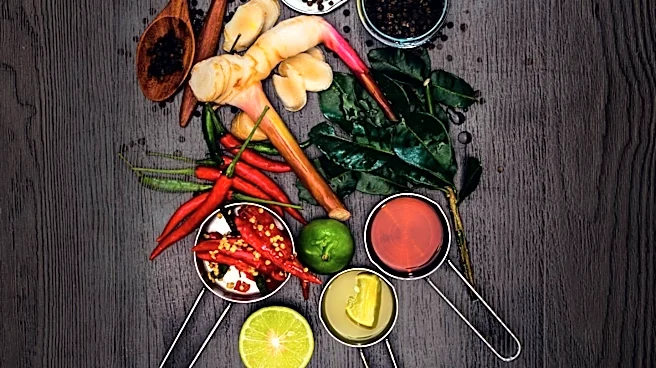
stir-frying thinly sliced pork belly with shredded galangal until the meat is slightly seared and golden-brown. The galangal, when fried, adheres to the pork, releasing a distinctive aroma that complements the richness of the pork belly. The recipe calls for 400g pork belly, a small galangal root, two shallots, 1-2 chilies (optional), one tablespoon fish sauce, half a teaspoon sugar, one teaspoon oyster sauce, a pinch of pepper, and green onions. The key step is to cook the pork in a not-too-hot pan to render its fat slowly, then add shallots and galangal, allowing them to brown and release their fragrance before seasoning.
Why It's Important?
This culinary innovation offers a fresh perspective on preparing a common ingredient, potentially revitalizing home cooking and expanding the repertoire of everyday meals. By introducing galangal, a spice known for its aromatic and slightly pungent qualities, the recipe addresses the common complaint of pork belly being too rich or monotonous. This approach could encourage more adventurous cooking among home chefs and introduce new flavor profiles to family dinners. From a broader perspective, such simple yet effective culinary tweaks can contribute to a more diverse and enjoyable food culture, potentially influencing food trends and ingredient choices in the market. The emphasis on balancing richness with aromatic spices also aligns with evolving dietary preferences that seek both flavor and a sense of lightness in meals.
What's Next?
The popularity of this recipe could lead to its wider adoption in home kitchens and potentially inspire variations in restaurants. Food bloggers and culinary enthusiasts may experiment further with galangal and other spices to create similar balanced dishes. This trend might also increase the demand for galangal in markets, encouraging suppliers to ensure its availability. For individuals, trying this recipe offers an opportunity to enhance their cooking skills and introduce new flavors to their diet. It could also spark interest in exploring other traditional spices and their applications in modern cooking. The success of such simple innovations often lies in their ability to transform familiar ingredients into exciting new experiences, making everyday meals more appealing and diverse.
Beyond the Headlines
Beyond its immediate culinary appeal, this recipe subtly highlights the enduring value of traditional ingredients and techniques in contemporary cooking. Galangal, a staple in many Asian cuisines, demonstrates how ancient spices can offer sophisticated flavor solutions to modern palates. The emphasis on 'searing' the pork and 'browning' the galangal speaks to fundamental cooking principles that enhance texture and aroma, often overlooked in faster, less mindful preparation methods. This approach encourages a more deliberate and appreciative engagement with the cooking process, transforming a routine task into a creative act. It also underscores the idea that culinary innovation doesn't always require exotic ingredients or complex procedures, but rather a thoughtful re-imagining of existing elements. This simple dish, therefore, serves as a reminder of the rich culinary heritage that can be tapped into to elevate everyday dining experiences.