








What's Happening?
Aureka, a techbio company based in Laguna Hills, California, and Shanghai, has introduced the Open Drug Discovery Engine (OpenDDE), an open-source AI platform designed to enhance drug discovery processes. Unlike many proprietary AI systems that come with
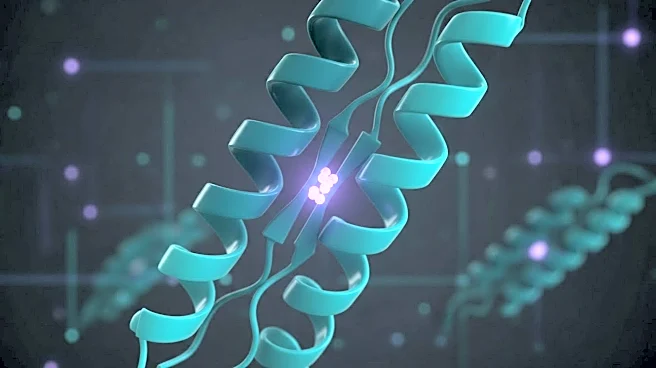
usage costs, OpenDDE aims to make biomolecular co-folding studies more accessible to a wide range of users, including researchers, startups, academic labs, and multinational corporations. The platform simulates every atom in a biological system, offering detailed insights into protein interactions and drug discovery research. Aureka plans to expand OpenDDE's capabilities to include de novo drug molecule design and other advanced functions. The company is also integrating this AI with a high-throughput automated wet-lab platform to create a comprehensive drug discovery system.
Why It's Important?
The introduction of OpenDDE by Aureka represents a significant shift towards democratizing access to advanced drug discovery tools. By providing an open-source platform, Aureka is lowering the barriers for entry into drug discovery, potentially accelerating innovation and reducing costs in the pharmaceutical industry. This could lead to faster development of new therapies and more personalized medicine approaches, benefiting patients and healthcare systems. The move also challenges the dominance of proprietary AI systems in the field, promoting a more collaborative and inclusive research environment. As the pharmaceutical industry increasingly relies on AI for drug development, Aureka's initiative could influence other companies to adopt similar open-source models.
What's Next?
Aureka plans to enhance OpenDDE by adding features such as structure-conditioned optimization and experimental feedback loops. These advancements will allow for more precise drug candidate design and validation. The company is also developing its own therapeutic candidate pipeline, which could lead to new drug discoveries. As OpenDDE evolves, it may attract more collaborators and users, further expanding its impact on the drug discovery landscape. The success of this initiative could prompt other techbio companies to explore open-source solutions, potentially transforming the industry's approach to innovation and collaboration.