





What's Happening?
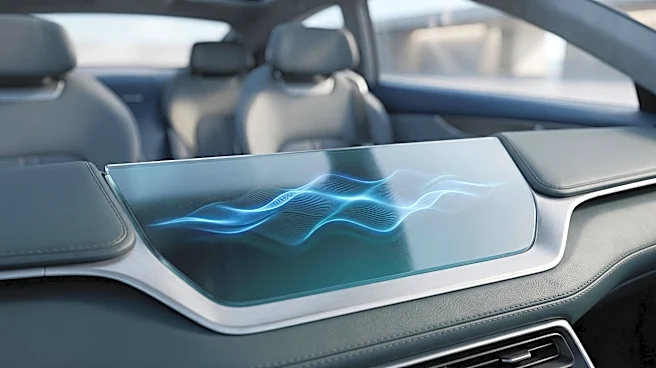
The automotive industry is significantly advancing its voice recognition systems to provide multi-modal, intuitive commands for controlling various vehicle functions. Leading companies such as Nuance Communications, Cerence Inc., Baidu Inc., SoundHound
AI Inc., SoundHound Inc., and Google LLC are focusing on embedded voice recognition systems, which enable real-time voice processing within vehicles. Other key players like Apple Inc., Amazon.com Inc., and Microsoft Corporation are prominent in cloud-based voice recognition systems and integration platforms, leveraging cloud infrastructure and AI-driven interfaces. Traditional automotive suppliers such as Continental AG, Robert Bosch GmbH, Denso Corporation, Visteon Corporation, and Aptiv PLC are concentrating on on-board voice assistant software and audio front-end hardware. Additionally, major car manufacturers like Hyundai Motor Company, Mercedes-Benz Group AG, and Toyota Motor Corporation are adopting hybrid voice recognition systems that combine both embedded and cloud solutions. Panasonic Corporation and Harman International Industries Inc. are active across multiple segments, including aftermarket devices, catering to both original equipment manufacturers (OEM) and aftermarket needs.
Why It's Important?
The evolution of automotive voice recognition systems holds significant implications for the U.S. automotive market and consumer experience. These advancements aim to enhance driver safety by minimizing distractions, allowing drivers to control infotainment, navigation, climate, and communication systems without taking their hands off the wheel or eyes off the road. For U.S. consumers, this translates to a more convenient, personalized, and safer driving experience. For the automotive industry, it represents a critical area of innovation and differentiation, driving competition among manufacturers and technology providers. Companies that excel in developing robust, accurate, and intuitive voice recognition will gain a competitive edge. Furthermore, the integration of AI and cloud-based solutions in vehicles opens new avenues for connected services and data exchange, potentially creating new revenue streams and business models for U.S. companies in the automotive and tech sectors.
What's Next?
The future of automotive voice recognition systems will likely see continued integration of advanced AI and machine learning to improve accuracy, natural language understanding, and contextual awareness. This will enable more complex and intuitive commands, moving beyond simple directives to more conversational interactions. There will be an ongoing push for seamless integration with other vehicle systems, such as driver assistance and safety features, to provide real-time alerts and warnings based on voice inputs combined with sensor data. The development of hybrid systems, blending embedded and cloud-based solutions, will continue to optimize performance, flexibility, and scalability. Furthermore, as these systems become more sophisticated, there will be an increased focus on cybersecurity to protect vehicle data and ensure the integrity of voice commands, as well as addressing privacy concerns related to in-car data collection.
Beyond the Headlines
The widespread adoption of advanced voice recognition in vehicles could fundamentally alter the driving experience, transforming cars into highly personalized and interactive mobile environments. This shift could lead to a re-evaluation of interior design, with less emphasis on physical controls and more on voice-activated interfaces. Ethically, the increasing reliance on AI for critical vehicle functions raises questions about accountability in case of errors or malfunctions. Legally, data privacy and ownership of the vast amounts of voice data collected in vehicles will become increasingly complex issues, requiring new regulations and industry standards. Culturally, it could further normalize human-AI interaction, potentially influencing communication patterns and expectations in other aspects of daily life. The development also highlights the growing convergence of the automotive and technology sectors, fostering new partnerships and challenging traditional industry boundaries.