



What's Happening?
Infineon Technologies AG and SOLUM have formalized their existing technical cooperation by signing a Memorandum of Understanding (MoU). This agreement aims to strengthen their collaboration on high-voltage direct current (HVDC) power solutions specifically
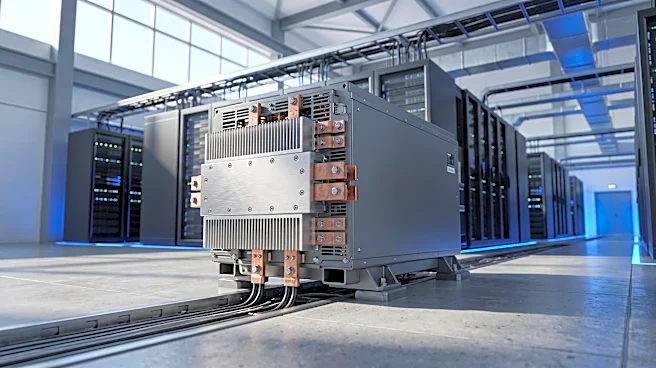
designed for AI data centers. The expanded partnership will focus on three critical power applications: intermediate bus converters (IBCs), battery backup units (BBUs), and power supply units (PSUs). The initiative is driven by the increasing power demands of generative AI and high-performance computing, which necessitate greater energy efficiency, power density, and system reliability in data center infrastructure. HVDC-based power architectures are emerging as a key technology to meet these demands by reducing power losses and improving reliability through more efficient power conversion and distribution. Infineon will contribute its semiconductor and system expertise, while SOLUM will leverage its capabilities in server power solutions and power module design and manufacturing to explore high-efficiency HVDC solutions. This collaboration will involve Infineon providing reference designs and technical support from the early stages of relevant projects, utilizing its broad portfolio of power semiconductors based on silicon, silicon carbide, and gallium nitride.
Why It's Important?
This strengthened collaboration between Infineon and SOLUM is crucial for the advancement of AI data center infrastructure, particularly in the U.S. and globally. As AI technologies continue to evolve and demand more computational power, the energy consumption and operational costs of data centers are escalating. HVDC power solutions offer a significant pathway to mitigate these challenges by enhancing energy efficiency and reliability. For U.S. industries heavily reliant on AI, such as technology, finance, and research, more efficient data centers translate into lower operational expenses and improved performance. The development of robust HVDC solutions can also reduce the environmental footprint of data centers, aligning with growing sustainability goals. Companies like Infineon, a global semiconductor leader, and SOLUM, with its server power capabilities, are at the forefront of enabling this critical infrastructure. Their combined efforts will likely set new standards for power management in AI data centers, influencing future design and deployment strategies across the U.S. and beyond. This partnership underscores the strategic importance of semiconductor innovation in supporting the burgeoning AI economy.
What's Next?
Following the signing of the MoU, Infineon and SOLUM are expected to engage in regular technical dialogues to advance next-generation developments in HVDC power systems for AI data centers. Infineon will continue to provide technical support and reference designs, working closely with SOLUM from the initial stages of project development. The focus will be on integrating Infineon's diverse portfolio of power semiconductors, including CoolMOS™, OptiMOS™, CoolSiC™, and CoolGaN™ devices, as well as PSOC™ microcontrollers and sensors, into SOLUM's power solutions. This ongoing collaboration aims to accelerate the development and adoption of high-efficiency HVDC solutions, which are critical for the evolving demands of AI infrastructure. The companies also intend to deepen their engagement with partners in key markets like Korea, a significant hub for AI innovation, to support regional AI data center development. The long-term goal is to establish a more robust and efficient power architecture for AI data centers globally, with potential implications for energy consumption and operational efficiency in the U.S. technology sector.
Beyond the Headlines
The collaboration between Infineon and SOLUM extends beyond immediate technical advancements, touching upon broader implications for the global technology landscape. The push for more efficient power solutions in AI data centers highlights an increasing awareness of the environmental impact of digital infrastructure. As AI becomes more pervasive, the energy demands of data centers could become a significant sustainability challenge. Innovations in HVDC technology, driven by partnerships like this, represent a proactive step towards mitigating this impact. Furthermore, the emphasis on reliability and power density reflects a growing need for resilient infrastructure capable of supporting mission-critical AI applications. This partnership could also influence supply chain dynamics within the semiconductor industry, as companies like Infineon solidify their positions as key enablers of AI. The ethical dimension of AI's energy consumption and the industry's responsibility to develop sustainable solutions are implicitly addressed through such technological advancements, fostering a more environmentally conscious approach to AI development and deployment.