






What's Happening?
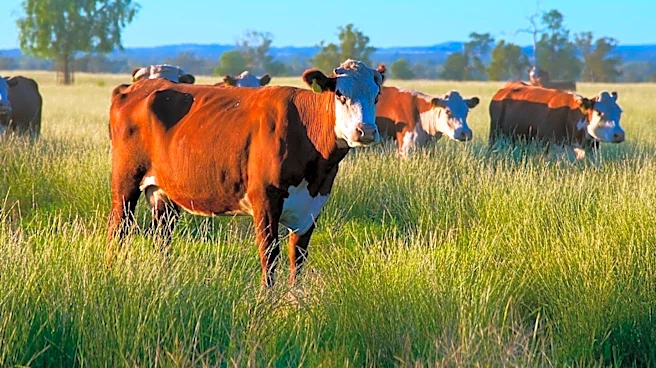
Tyson Foods has adjusted its annual profit forecast downward due to ongoing challenges in its beef business, primarily driven by tight U.S. cattle supplies that have kept livestock costs elevated. The company anticipates steeper losses in its beef segment,
with a forecasted operating income loss of $650 million for the year. Despite these challenges, Tyson Foods has seen a rise in chicken sales, which has helped offset some of the weakness in its beef segment. The company expects revenue growth of 2.5% to 3.5% for the year, a revision from its earlier forecast of 2% to 4%.
Why It's Important?
The revision in Tyson Foods' profit forecast highlights the significant impact of cattle supply shortages on the U.S. beef industry. This situation affects not only Tyson Foods but also the broader meat industry, potentially leading to higher consumer prices for beef. The company's ability to offset some losses with increased chicken sales demonstrates the importance of diversification in the food industry. Stakeholders, including investors and consumers, may experience the effects of these market dynamics through fluctuating prices and potential changes in product availability.
What's Next?
Tyson Foods will likely continue to navigate the challenges posed by cattle supply shortages. The company may explore strategies to mitigate losses in its beef segment, such as cost management and operational efficiencies. Additionally, Tyson Foods might focus on expanding its chicken and prepared foods segments to bolster overall profitability. Industry observers will be watching for any further adjustments to the company's financial outlook and potential impacts on the meat market.