






What's Happening?
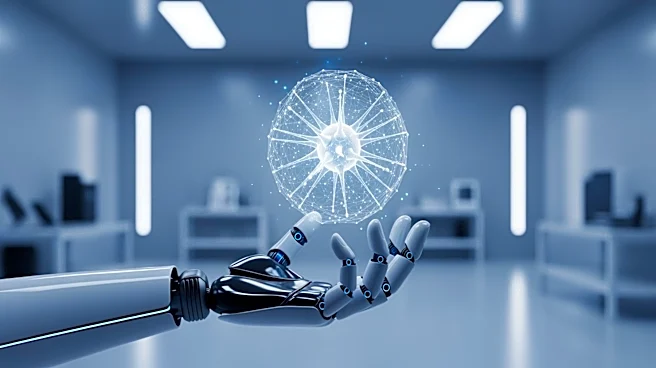
X Square Robot, a Chinese robotics company, is making significant strides in the field of humanoid robotics by focusing on developing the 'brain' for embodied AI. The company has identified that while the hardware for humanoid robots, such as locomotion
and dexterous hands, has advanced, the real challenge lies in developing intelligence. To address this, X Square Robot has open-sourced three technologies: Wall-OSS-0.5, a Vision-Language-Action (VLA) model; WALL-WM, a World Action Model; and XRZero-G0, a robot-free data collection and training framework. These technologies aim to enhance robots' ability to operate in real-world environments by improving their understanding of physical events and reducing data costs for training.
Why It's Important?
The advancements by X Square Robot are crucial as they address the bottleneck in humanoid robotics, which is the development of intelligent systems capable of operating in unpredictable environments. This progress could significantly impact industries that rely on automation and robotics, such as manufacturing and service sectors, by enabling robots to perform complex tasks with minimal human intervention. The open-sourcing of these technologies also promotes collaboration and innovation within the robotics community, potentially accelerating the development of more sophisticated and capable humanoid robots.
What's Next?
X Square Robot's initiatives could lead to broader adoption of humanoid robots in various industries as they become more capable of understanding and interacting with their environments. The company's approach to open-sourcing its technologies may encourage other firms to contribute to the development of embodied AI, fostering a collaborative ecosystem. As these technologies mature, we can expect to see robots taking on more roles traditionally performed by humans, which could lead to shifts in labor markets and economic structures.
Beyond the Headlines
The development of intelligent humanoid robots raises ethical and societal questions, such as the potential displacement of human workers and the need for new regulatory frameworks to manage the integration of robots into daily life. Additionally, as robots become more autonomous, issues related to accountability and decision-making in unforeseen situations will need to be addressed. These developments could also influence cultural perceptions of robots and their role in society.